Step 1 of 3
Understand it
The short answer, then why it happens.
The short answer
Concrete shrinks as it dries, and shrinking concrete cracks. That is why a well built slab still has cracks, and why control joints are cut into it: they give the cracks a straight, planned place to form. A thin hairline crack with both sides at the same height is usually cosmetic. A crack where one side sits higher than the other, or one that keeps widening, usually means the ground under the slab has moved.
Why a slab cracks at all
Concrete is mixed wet and gives up water as it hardens.
As it loses that water it shrinks, and a large flat slab cannot shrink freely because it is held by the ground beneath it. The stress that builds up is relieved by cracking.
So cracking is expected. The goal when pouring a slab is to control where the cracks go and to keep them narrow, not to prevent them completely. Anyone who promises a slab that will never crack is promising something concrete does not do.
Step 2 of 3
See it
Each picture sits right after the section it explains.
See itIllustrates section 01: Why a slab cracks at all
Watch it happen
Why a slab cracks at all
A slab shrinks as it gives up water but is held by the ground, so the stress is relieved by a crack.
1. The ground holds the slab
Concrete is mixed wet and gives up water as it hardens. As it loses that water it shrinks, and a large flat slab cannot shrink freely because it is held by the ground beneath it.
2. Stress is relieved by cracking
The stress that builds up is relieved by cracking.
What control joints do
Control joints are grooves cut or tooled into the surface, a fraction of the way through the slab, in a pattern.
They create a deliberate weak line, and the slab tends to crack along it, below the surface, in a straight line you hardly notice.
Problems come when joints are missing, spaced too far apart, or cut too late, after the concrete has already started to crack on its own. The result is cracks in random directions across the face of the slab, often diagonal from the corners.
See itIllustrates section 02: What control joints do
Watch it happen
What control joints do
Joints are cut into the surface and the crack forms under them, straight and out of sight. Without joints the cracks run in random directions.
1. A deliberate weak line
Control joints are grooves cut or tooled into the surface, a fraction of the way through the slab, in a pattern. They create a deliberate weak line.
2. The slab cracks along it
The slab tends to crack along it, below the surface, in a straight line you hardly notice.
3. When joints are missing
Problems come when joints are missing, spaced too far apart, or cut too late, after the concrete has already started to crack on its own. The result is cracks in random directions across the face of the slab, often diagonal from the corners.
Cracks that are cosmetic
A thin crack, no wider than a pencil line, with both sides at the same height, is common and usually cosmetic.
It may be sealed to keep water out of it. Watch it for widening.
Cracks that follow the control joints are doing their job. They look like the joint itself, and they do not need repair beyond sealing if water is getting in.
Cracks that matter
A crack where one side is higher than the other is a trip hazard and a sign of movement underneath.
The ground may have settled, water may have washed material out from under the slab, frost may have heaved it, or a tree root may be pushing it up. Sealing the crack does not fix that.
Cracks that keep widening, that run across the whole slab, or that appear with a dip or a heave near them also point to the ground. Water collecting under a slab does damage over time, and a crack is a way in for it. In cold weather the water freezes and the cracks get worse.
Surface flaking and scaling, where the top layer peels in patches, is a different kind of damage. It is about the surface of the concrete and is a separate matter from cracking.
Walk the slab and look at the cracks one at a time. Run your hand or the edge of your shoe across each one to feel whether one side sits higher. Look at the slope of the surface and whether water collects in a low spot, because standing water over a crack is a sign it is getting underneath.
Photograph each crack with a coin or ruler beside it, and mark the ends with a pencil and a date. Look at the area around the slab for the likely causes: standing water, a tree close by, a trench that was dug and refilled and not well compacted, or a place where the ground has dropped away at the edge.
These notes help whoever you call. A slab that has cracked along its joints and sits level may need only sealing. A slab with offset cracks beside standing water or a tree is telling you the repair has to start with the cause, and a patch on top of it will not last.
See itIllustrates section 04: Cracks that matter
Watch it happen
Cracks that matter
A crack that follows a joint, water getting into it, the base washing out from under, and one side dropping.
1. Cracks that follow the joints
Cracks that follow the control joints are doing their job. They look like the joint itself, and they do not need repair beyond sealing if water is getting in.
2. A crack is a way in
Water collecting under a slab does damage over time, and a crack is a way in for it.
3. Washed out from under
The ground may have settled, water may have washed material out from under the slab, or a tree root may be pushing it up.
4. One side higher than the other
A crack where one side is higher than the other is a trip hazard and a sign of movement underneath. Sealing the crack does not fix that.
What goes wrong when the concrete is placed
Some cracking is built in at the pour.
Extra water added to make the concrete easier to work weakens it and makes it shrink more. Letting it dry too quickly, in sun, wind or heat, can crack the surface before it has gained strength. A thin or poorly prepared base lets a slab move under load.
These are the questions to ask anyone who quotes a new slab: how the base is prepared, where the control joints go and how the concrete is protected while it cures. A clear answer is a good sign.
Repair, resurface or replace
A stable crack is cleaned and sealed.
A damaged patch of surface can be repaired or resurfaced. A section that has dropped, heaved or cracked through in several places is better removed and replaced, with the base put right underneath, because patching over a base that has moved only lasts until it moves again.
We replaced a failed concrete walkway in Rahway with a paver hardscape built on a full structural base. That job replaced a failing slab with a paver surface on a full structural base. We have not published a concrete pour, so this guide is about how to read a slab and decide, not a job we point to.
See itIllustrates section 06: Repair, resurface or replace
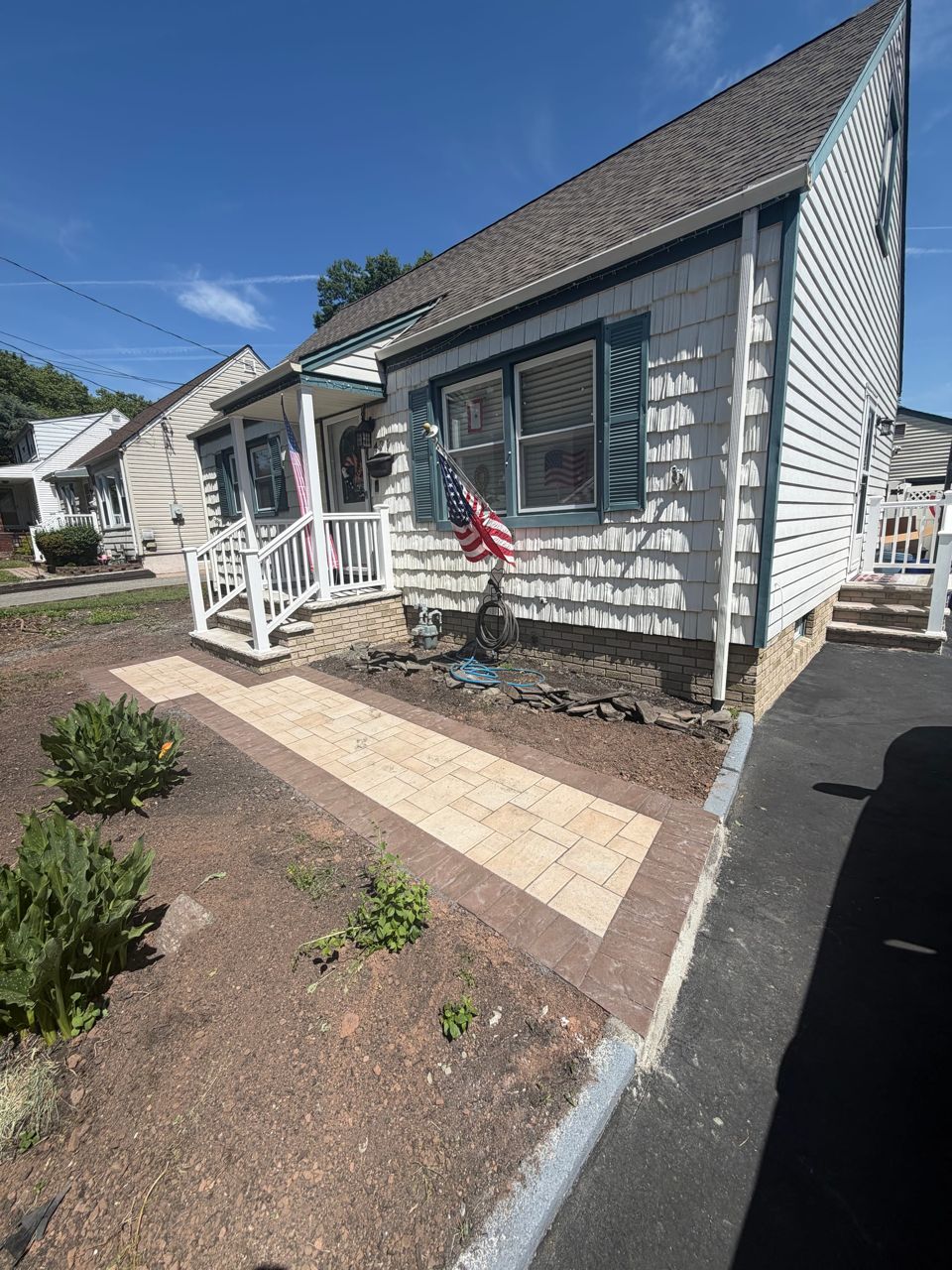
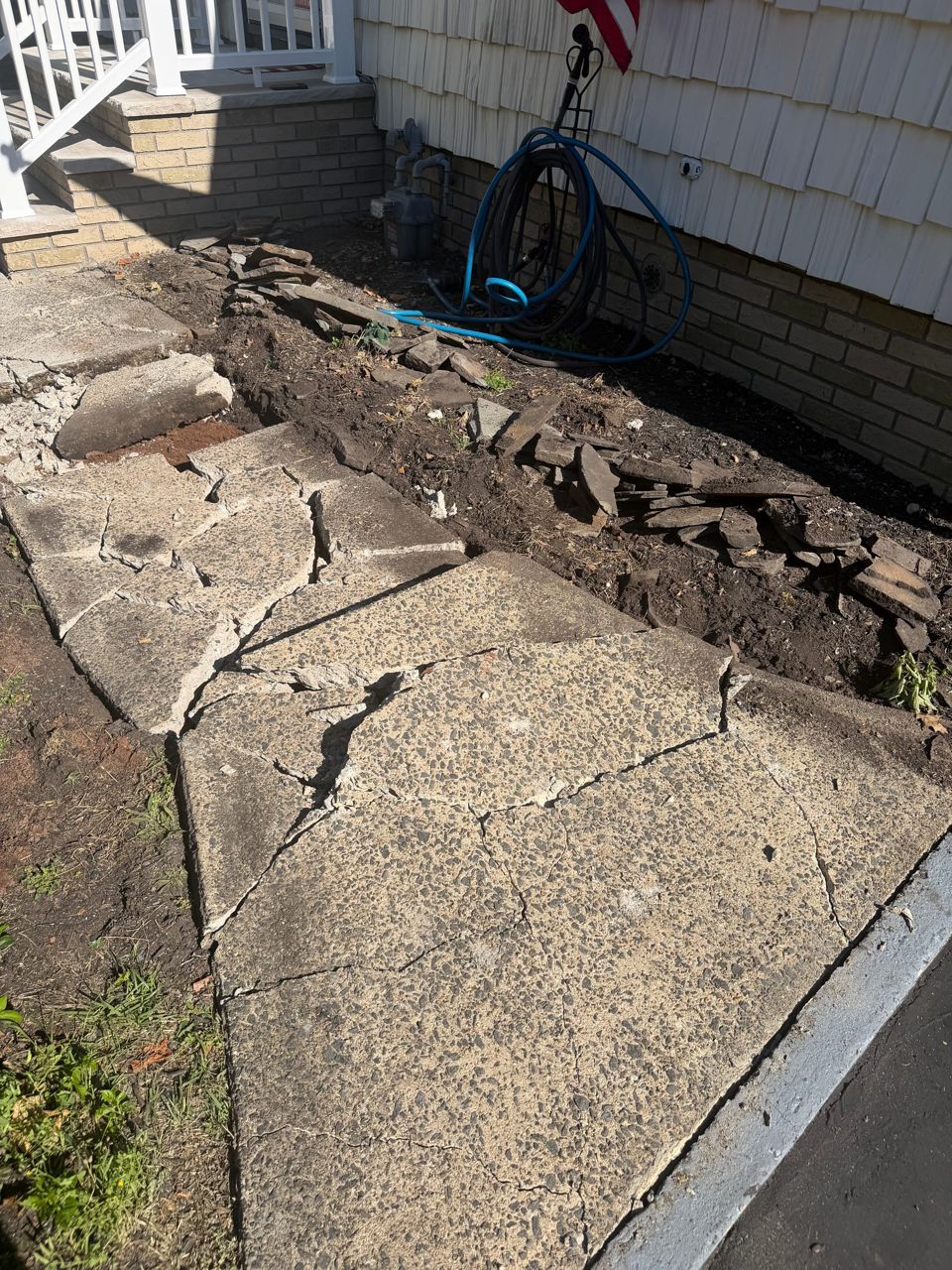 BeforeAfter
Step 3 of 3
Act on it
Quick answers, where to read next, and how we can help.
Questions people ask
Is a cracked concrete slab always a problem?
No. Nearly every slab cracks. A thin crack with both sides level is usually cosmetic. A crack with one side higher, or one that keeps widening, is the type to look into.
Can cracks be prevented?
They can be controlled, not removed. Control joints in the right pattern, a firm base, a sensible mix and proper curing keep cracks few, narrow and in straight lines.
Should I seal a crack in my driveway or patio?
Sealing a stable crack keeps water and frost out of it. Sealing a crack where the slab is moving only delays it, and the crack opens again.
Why did my new slab crack so soon?
Common reasons are no control joints, joints cut too late or too far apart, too much water in the mix, or drying too quickly. A look at the pattern of the cracks usually points to which.
When is replacing better than repairing?
When the slab has dropped, heaved or cracked through in several places. The base is the problem, and patching the top does not fix it.
Seeing this at your place?
Send us a few photos through the contact page and the chat there, and we'll tell you what we think.
Request an estimateOur masonry and concrete workAll guides
Enduring On Construction, a New Jersey general contractor. NJ home improvement contractor registration 13VH13745900.
