Union County, New Jersey
General contractor in Rahway, NJ
Rahway, NJ
Rahway, NJ
Rahway, NJ
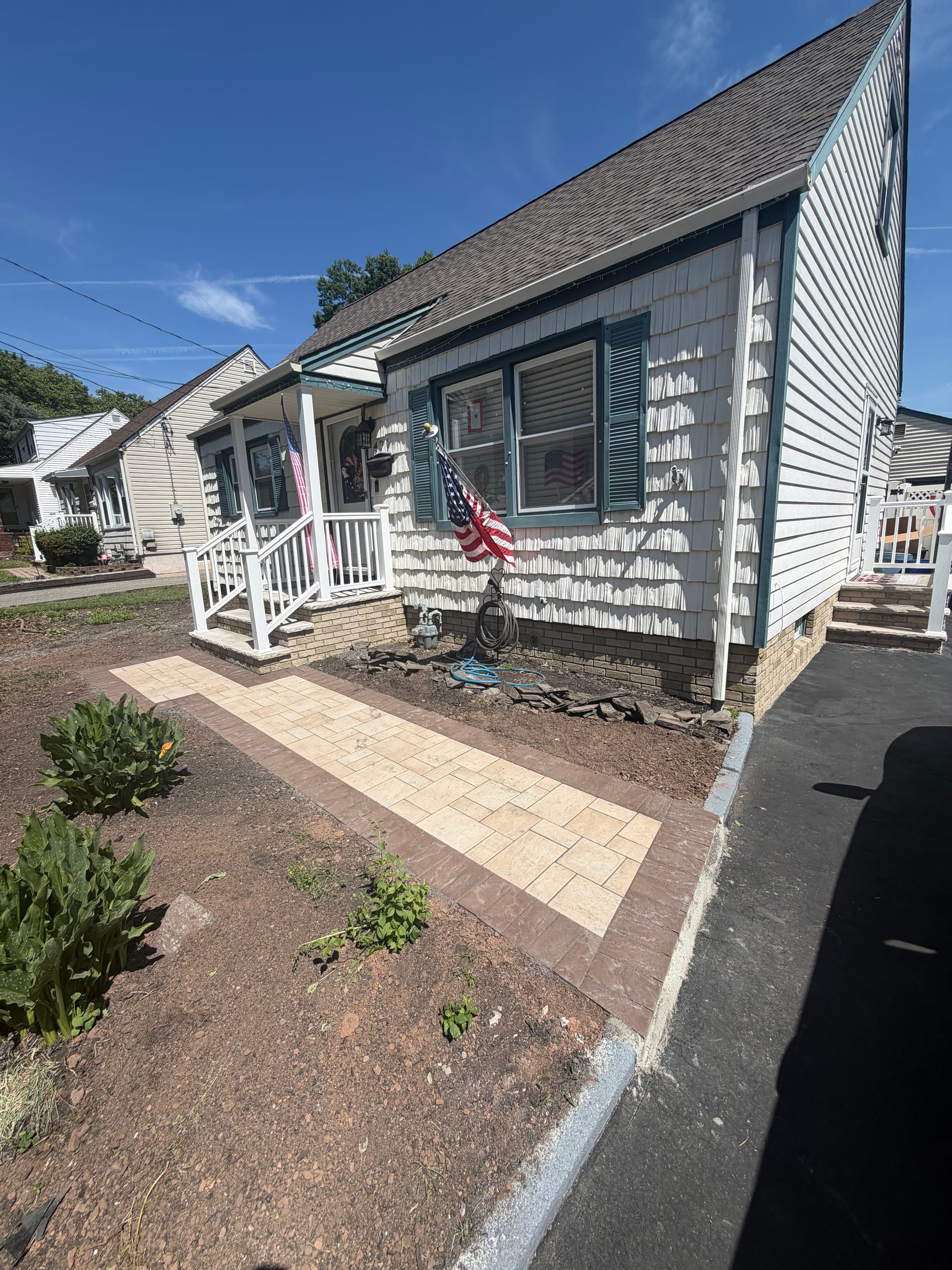
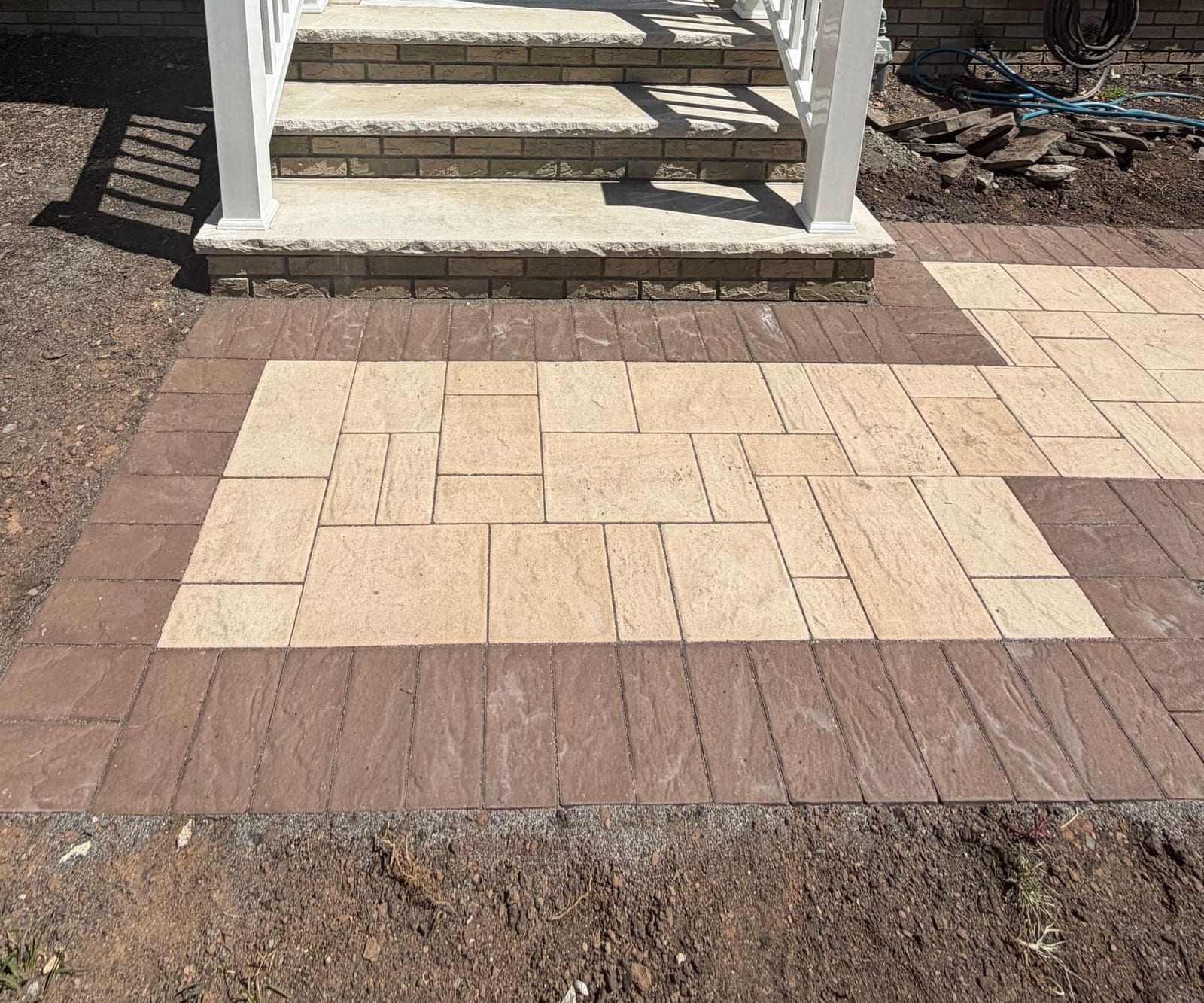
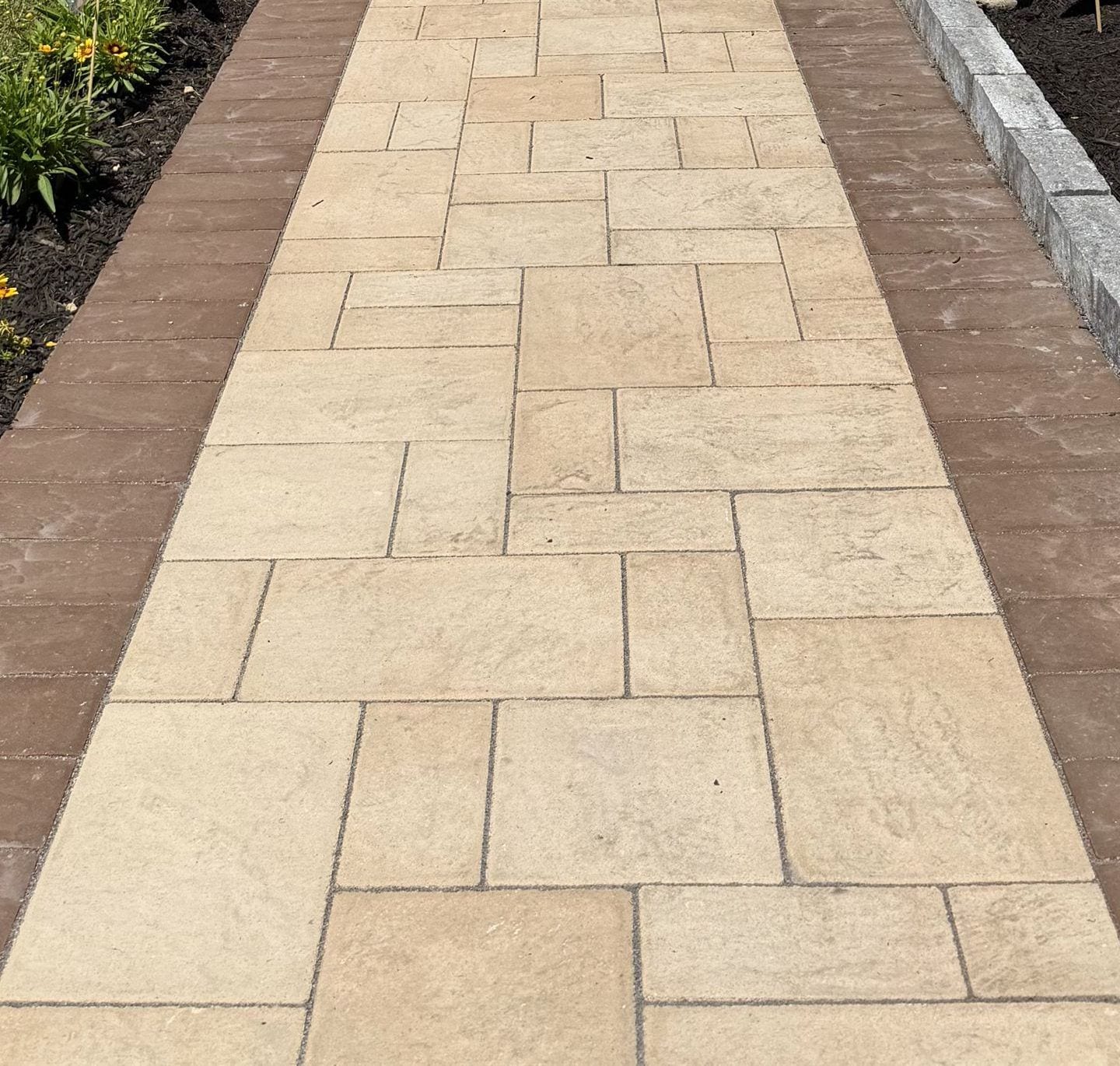
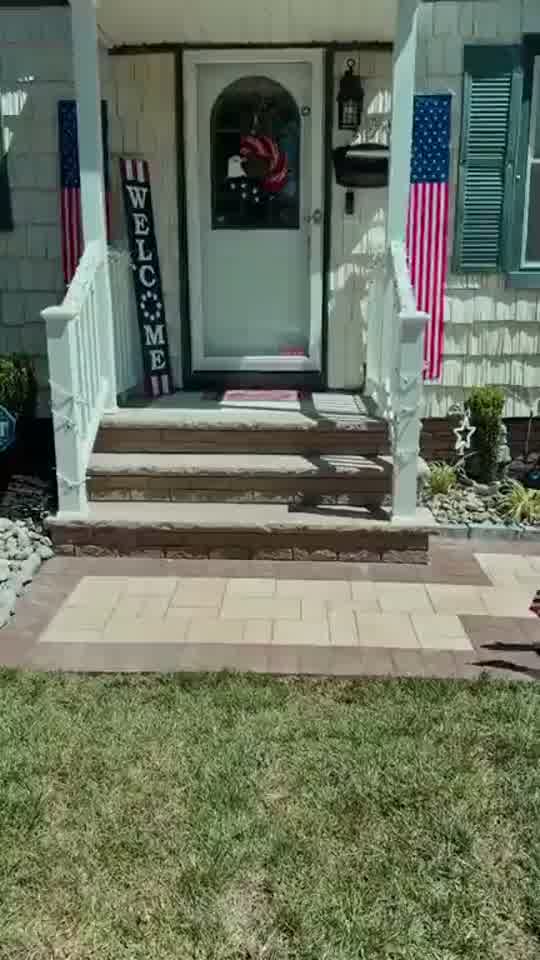
Enduring On completed a residential hardscape project in Rahway that started before any material arrived. The homeowner wanted pavers for her sidewalk but had never worked with them before and did not know what was available. Rather than handing over a brochure and waiting for a decision, Enduring On ran the selection with her directly -- brochures and physical samples brought to the property, the options worked through together until she was happy with the choice, the base color settled the same way, and a contrasting soldier-course border added once the field color was set. Rahway sits in Union County, alongside Clark, where Enduring On is based.
The original concrete walkway had broken up in place, and the job replaced it end to end with a paver walk from the sidewalk to the entry steps: breaking out and hauling the failed concrete, opening and re-compacting the sub-base, then setting edge restraint before the pavers went down, so the finished walk holds its line at the border course rather than shifting under the first freeze-thaw cycle. The joint that took the most care was not out in the open field of the walk -- it was where the new pavers meet the existing driveway, the seam where a paver job most visibly succeeds or fails. Getting the levels and the edge right at that transition, so it reads as one surface rather than two materials butted against each other, is the difference between a walk that looks installed and one that looks added on afterward.
Before any of that below-grade work starts, New Jersey law requires a call to the state's 811 One Call center at least three full business days ahead -- a statutory requirement, not a courtesy, that applies to a homeowner or a contractor breaking ground for a walkway, a fence, a deck or a garden bed alike, so buried gas, electric and water lines get marked out before anyone digs into them. On a walkway job like Rahway's, that markout runs the length of the excavation from the sidewalk to the entry steps, since the sub-base has to be opened along that whole run.
Rahway sits on the Rahway River, and the river is the fact that shapes site work here more than any other. It runs through the city after passing through Springfield, Union Township, Cranford and Clark upstream, and the watershed has a long, documented flood record: damaging floods in July 1938, May 1968, August 1971, August 1973, July 1975, June 1992, October 1996, July 1997, Tropical Storm Floyd in September 1999, an April 2007 nor'easter and Hurricane Irene in August 2011. Floyd alone put more than a million dollars of damage into the city's own public library, built on the floodplain, which is why the replacement library was sited away from the river corridor when it reopened in 2004. Rahway's own construction ordinance answers to that history directly: anyone intending development in a flood hazard area has to apply to the city's Floodplain Administrator and obtain a floodplain development permit before the building permit is issued. A like-for- like walkway replacement, flush to existing grade, is a different case from work that adds impervious coverage or changes grade near the river -- a patio, a retaining wall, an addition -- and it is the latter that draws the floodplain review as a genuine added step, not an in-kind repair.
That history is also why downtown Rahway has spent the past three decades rebuilding itself. Starting in the late 1990s the city set out to revitalize its downtown, and the plan authorized hundreds of new market-rate housing units alongside a hotel, art galleries and added retail space -- a deliberate mix of residential and commercial building stock going up around a historic rail-served downtown rather than a single land use. Census figures back up how much of that is recent: roughly a quarter of Rahway's housing has been built since 2000, a meaningfully higher share of new construction than the county generally, sitting alongside a downtown core where the Merchants and Drovers Tavern, a National Register listing on Saint Georges Avenue since 1978, has stood since the city's earliest years as a stagecoach stop.
Underneath that recent building boom, Rahway's older housing stock still runs close to half the city. Just under half of its housing predates 1960, and the pre-1970 share is higher still -- which means a renovation or an exterior job in an older Rahway neighborhood is working on the same generation of systems Newark and Union County's older towns are: original electrical services, aging drain lines, and roofing and siding that has already outlived one full replacement cycle. Paired with the flood history above, the two facts that most change how a Rahway exterior or site job actually gets built are the same two questions Enduring On answers on a first site walk here: is any part of the scope close enough to the river corridor to need a floodplain permit before the building permit, and does the existing structure's age mean the systems behind the walls need attention alongside whatever is visible on the surface.
Not every piece of exterior work in Rahway needs a construction permit in the first place, and knowing which tier a job falls into changes the schedule before a shovel goes in the ground. New Jersey's Uniform Construction Code sorts work into three tiers: ordinary maintenance, which needs no permit and no inspection at all; minor work, which needs a permit but a lighter review; and everything else, which goes through the full subcode process. A like-for-like walkway repair using the same materials can sit close to that ordinary-maintenance line, while replacing the walkway's structure -- as the hardscape job here did, tearing out the failed concrete down to the sub-base -- puts the job squarely into permitted work, on top of whatever floodplain review the site itself requires.
A separate permit can apply on top of the city's own review, and it depends entirely on which street a property fronts. Where a job's frontage sits on a county route rather than a purely local street, site work reaching the curb, sidewalk or driveway apron also needs a road-opening permit from the Union County Engineering Department, a distinct process from the city's own building and floodplain permits. The county's own land development standards set the construction specifics for that work directly -- sidewalks four inches thick generally, six inches at a residential driveway apron, and twelve inches at a commercial or industrial one -- so a walkway or driveway job on a county road is built to a different concrete thickness at the curb than the same job set back from it.
Once a complete application is filed, the schedule is set by state rule rather than any one department's workload: New Jersey requires the enforcing agency to approve or deny a complete UCC application within 20 business days, and a failure to act within that window is treated as a denial the applicant can bring straight to the Construction Board of Appeals. That clock only starts once the application is genuinely complete, and it covers the UCC permit alone -- it runs alongside, not instead of, whatever floodplain or county road-opening review a given Rahway site also needs, so the honest schedule for an exterior job here is the longest of those reviews, not the fastest.
Enduring On's own process on a Rahway job runs from that first site walk -- utilities marked out through 811 before ground is broken, the city's Building Division and, where the scope calls for it, the Floodplain Administrator brought in before permits are filed -- through the excavation and structural work below grade, and closing out only once the finished work has passed its own inspection rather than the whole job being inspected at once. The hardscape job above followed that same sequence below grade, on top of the selection work that came before ground was ever broken, and it is the sequence any exterior or site job in Rahway follows for the same reason: the river and the age of the surrounding stock are facts about the ground, not about any one job.
Projects in Rahway
Send us the job
Drawings, or a building that needs work. We will come and look at it with you.

Enduring On LLC, license, registration and contact details
Contractor
Enduring On Construction
Enduring On LLC · New Jersey general contractor
Home improvement
13VH13745900
NJ Div. of Consumer Affairs
Public works
753861
NJ Dept. of Labor
New home builder
0058509
NJ Dept. of Community Affairs
Based
Clark, New Jersey
Telephone
(908) 887-3118Fully insured, with certificates and additional-insured endorsements issued on request. Registered with the New Jersey Department of Labor to perform public work at prevailing wage.
Verifiable with the State of New Jersey