Step 1 of 3
Understand it
The short answer, then why it happens.
The short answer
Pavers sink because the base under them moves. The pavers themselves are a hard, stable surface sitting on a few layers: compacted stone, a thin bed of sand, and soil beneath. When one of those layers is too thin, was not compacted, or gets washed out by water, the paving settles into the gap. The fix is to lift the pavers, rebuild what is underneath and lay them back, not to add sand on top.
What is under a paver surface
A paver patio, walkway or driveway is a built assembly, not a layer of stones.
The soil is excavated, then a base of dense-graded stone is placed and compacted. A thin bed of sand goes on that to set the pavers level. The pavers go on the sand, the joints are filled with sand that locks them together, and an edge restraint holds the outside of the field.
Each layer has a job. The base carries the load and spreads it to the soil. The bedding sand lets the pavers be set to a precise height. The jointing sand makes the surface act as one unit. The edge keeps it from spreading. Take away or weaken any of them and the surface settles.
Step 2 of 3
See it
Each picture sits right after the section it explains.
See itIllustrates section 01: What is under a paver surface
Watch it happen
Watch a paver surface get built, layer by layer
A cross-section built from the bottom up: soil, compacted stone base, bedding sand, pavers, jointing sand, and an edge restraint on the outside, and then a finished surface that stays level.
1. Soil
The soil is excavated first. Everything else sits on it.
2. Compacted base
A base of dense-graded stone is placed and compacted. It carries the load and spreads it to the soil.
3. Bedding sand
A thin bed of sand goes on the base. It lets the pavers be set to a precise height.
4. Pavers
The pavers go on the sand.
5. Jointing sand
The joints are filled with sand that locks the pavers together. It makes the surface act as one unit.
6. Edge restraint
An edge restraint holds the outside of the field. The edge keeps it from spreading.
7. A surface that is holding
Every layer is in place, so the load is carried and the pavers stay level.
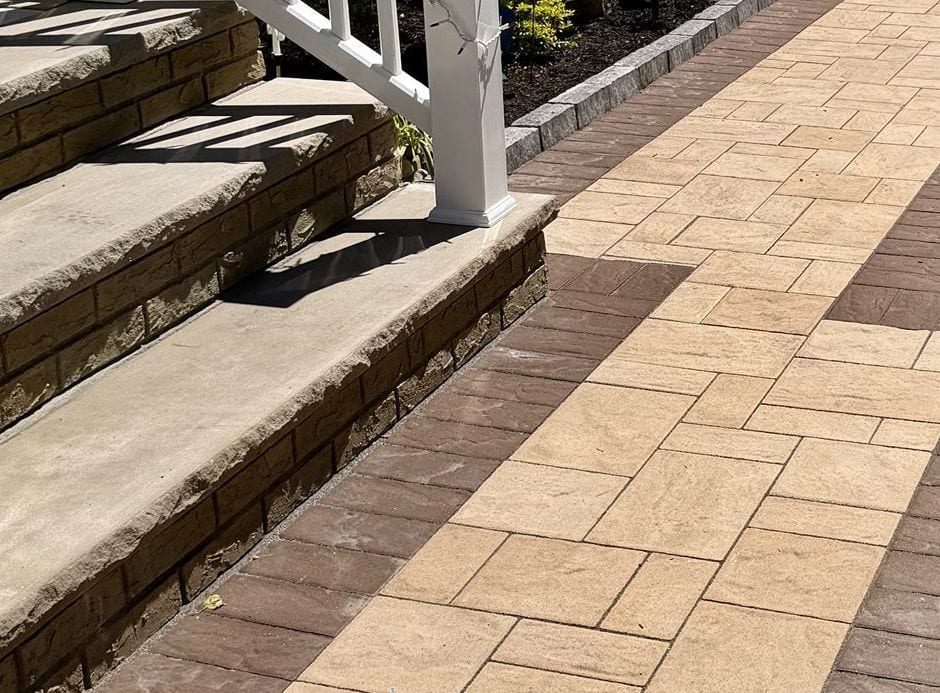
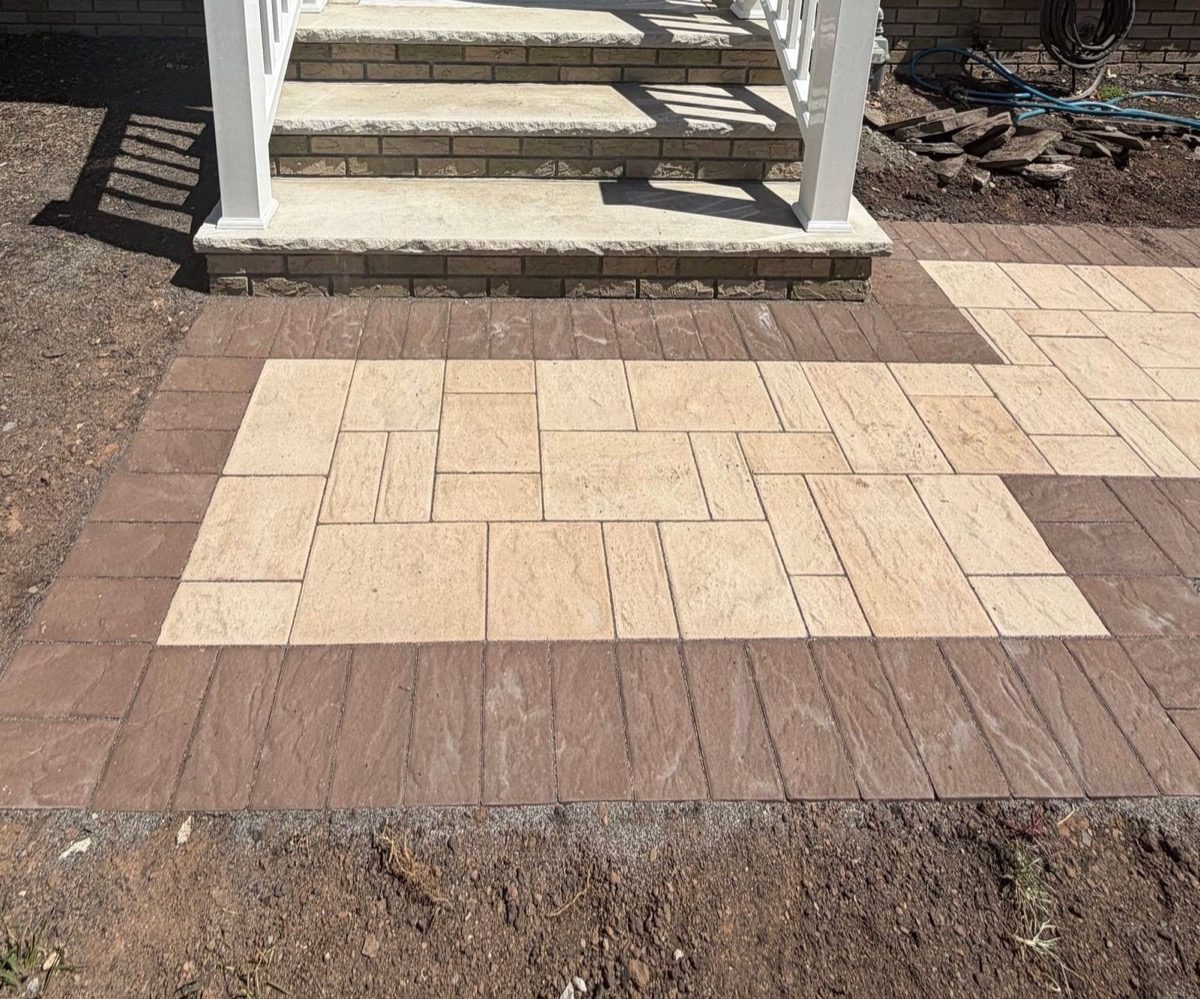 Our work
The common reasons paving sinks
The most usual cause is a base that was too thin, was put down in one thick layer and not compacted in stages, or was built on soil that was soft or disturbed.
The paving then drops as the base compresses under traffic, often along a wheel path on a driveway.
Water is the second cause. If water runs under or through the paving, it can carry bedding sand and fine material out through the joints or the edges, which leaves a void. A downspout that discharges onto the paving, a low spot that holds water, or a surface that slopes toward the house all send water where it does damage.
Smaller causes are local. A tree root can push the surface up in one place. A trench that was backfilled for a pipe or a cable can settle later along its length. A missing or failed edge restraint lets the pavers creep outward until the joints open and the field loses its lock.
See itIllustrates section 02: The common reasons paving sinks
Watch it happen
How a paver surface settles
A finished surface, then water reaching the base, the base material washing out and leaving a void, and the paving dropping into the gap.
1. A surface that is holding
Every layer is in place, so the load is carried and the pavers stay level.
2. Water finds a way in
If water runs under or through the paving, it can carry bedding sand and fine material out through the joints or the edges.
3. A void is left behind
What the water carried out leaves a void under the paving.
4. The paving settles into the gap
With nothing under them, the pavers drop into the gap. The dip is what you see on the surface.
Read the pattern before you fix anything
Look at where the sinking is. A long dip along the center of a driveway points to a base that has compressed under wheel loads.
A low corner near a downspout points to water. A strip of loose pavers along one edge points to the edge restraint. Sinking over a line, where a trench was dug, points to the backfill.
Take a photo from low down along the surface in good light, and lay a straight board or a long level across the low area. That shows the depth of the dip and how far it runs. The same photo helps whoever quotes the work to see what you are describing.
How a proper repair is done
The pavers in the affected area are lifted and stacked in order, so the pattern goes back the way it was.
The bedding sand is removed. The base is checked. If it is wet, thin or loose, it is dug out and replaced with stone that is compacted in layers, and the cause of the water, if there is one, is dealt with first.
Fresh bedding sand is screeded to the correct height, the pavers are laid back, the joints are filled and compacted, and the edge is secured. Done this way, the repaired area matches the rest of the surface and stays there.
Pouring sand over a sunken area, or lifting a few pavers and packing sand under them, hides the dip for a season. It does not change what is underneath, and the settlement returns.
What we have built
Our recorded paver job is in Rahway, where we replaced a failed concrete walkway with a paver hardscape built to a full structural assembly, from the sidewalk to the front steps. That means excavation, a compacted stone base, bedding sand, the pavers with a border course, jointing sand and edge restraint. We have not published a paver settlement repair, so this guide describes how the repair is done and what to look for, not a job we are pointing to.
See itIllustrates section 05: What we have built
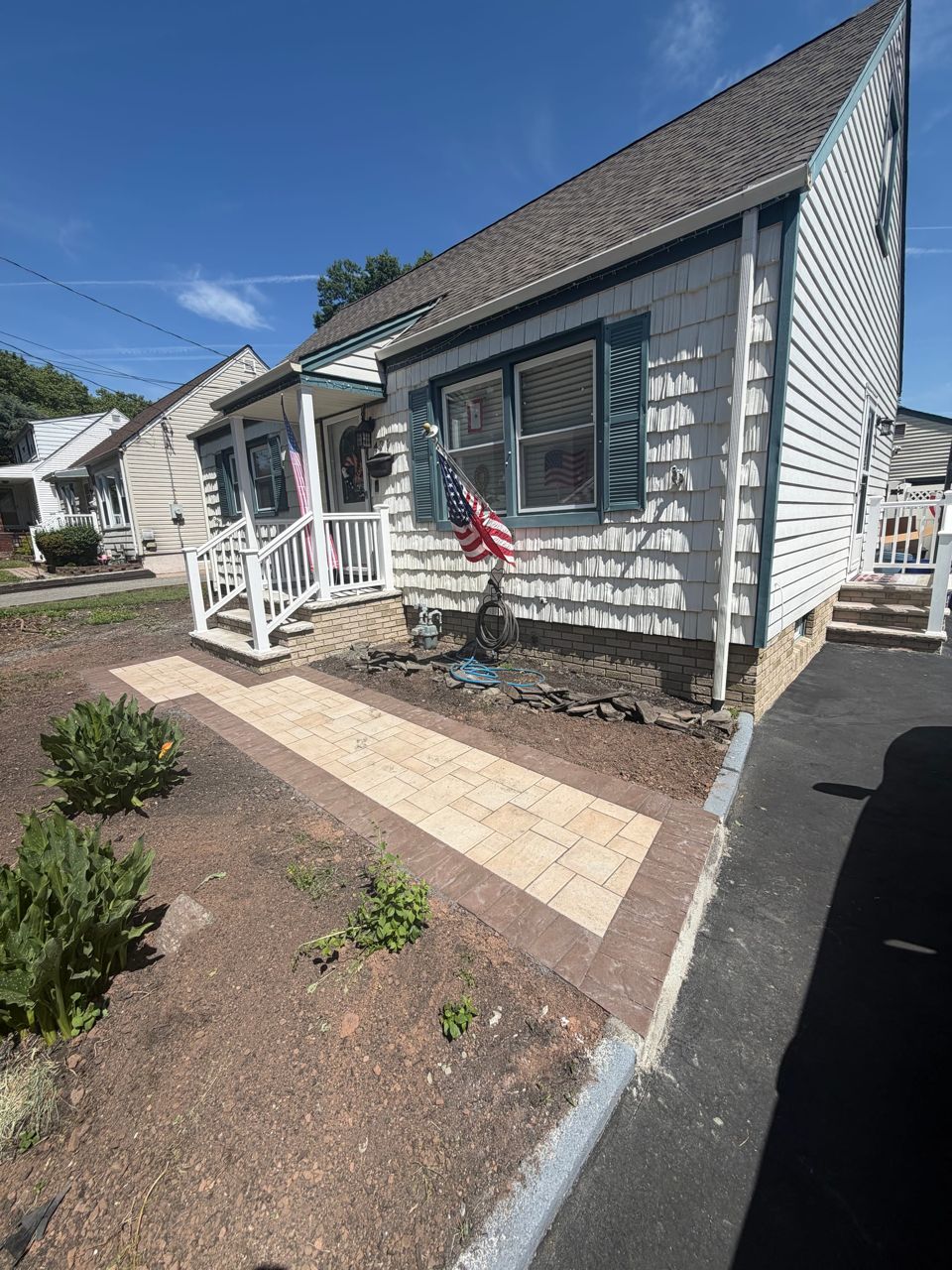
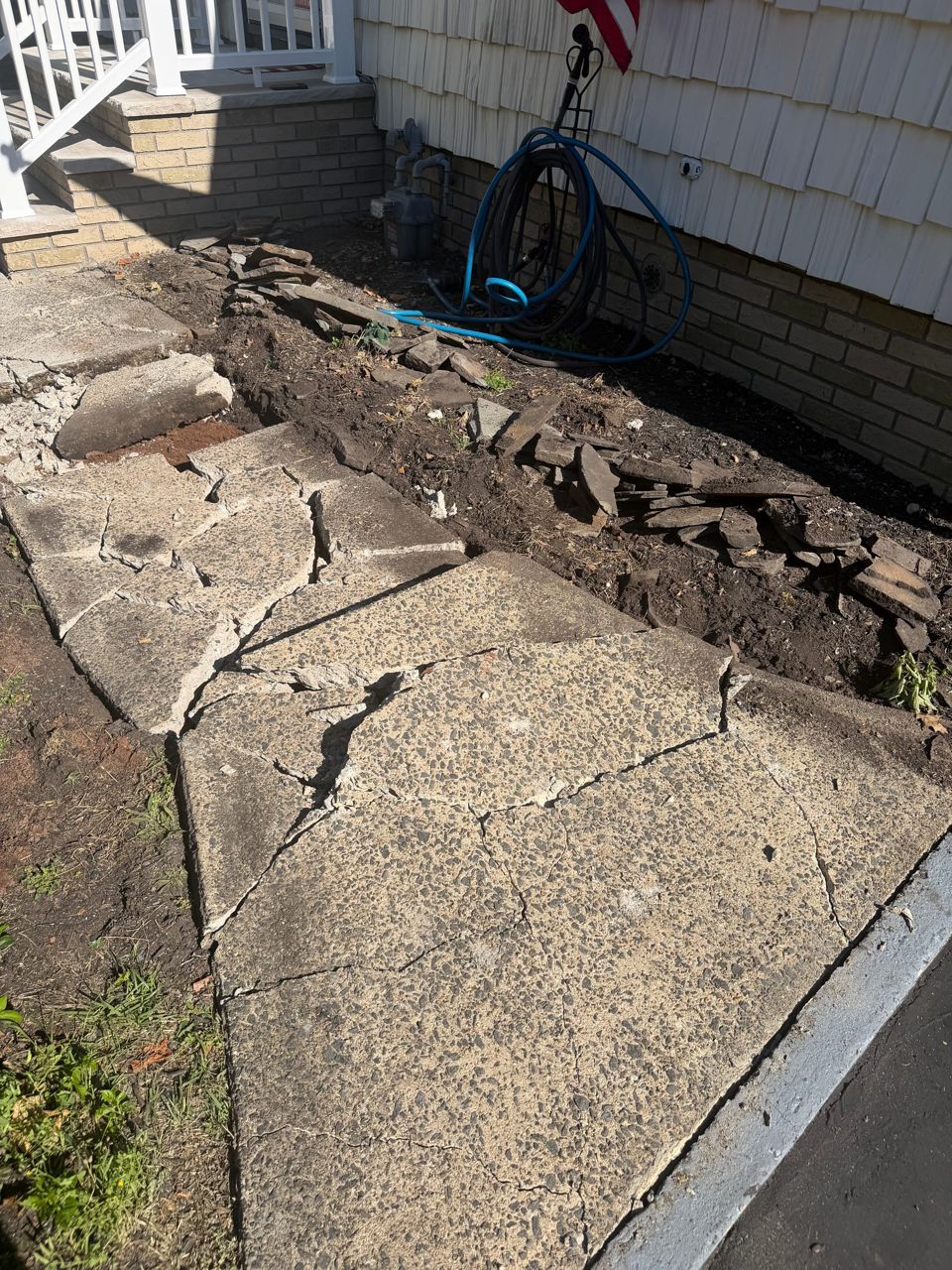 BeforeAfter
When to repair and when to rebuild
A small settled area with a clear cause, such as a downspout that has since been redirected, can be lifted and relaid.
A large area that has sunk across a driveway, or a surface that has settled and been fixed more than once, suggests the base was never right, and a rebuild of the section is the honest answer.
We would rather tell you that after looking than quote a patch that will come back. Photos with the address are enough for us to give you a first read.
Step 3 of 3
Act on it
Quick answers, where to read next, and how we can help.
Questions people ask
Can I fix sunken pavers by adding sand?
Not for long. Sand on top hides the dip, but the base underneath is still low or washed out, and the surface settles again. The pavers need to be lifted and the layers rebuilt.
Why are only some of my pavers sinking?
Settlement follows what is underneath. A localized dip usually means a thin spot in the base, a void from water, a root or a trench. The pattern of the dip points to the cause.
Do the pavers need to be replaced?
Usually not. Concrete pavers are lifted, stacked in order and reused. Any that are cracked or stained are swapped for matching ones where they can be found.
Will it sink again after the repair?
Not if the cause is found and fixed. If water is the cause and the water is still reaching the paving, the repair will not last, so we look at drainage first.
Can weeds and ants come through the joints?
They can if the jointing sand has washed out. Properly filled joints are harder for both, and the surface that holds its lock is also the one that does not settle.
Seeing this at your place?
Send us a few photos through the contact page and the chat there, and we'll tell you what we think.
Request an estimateOur masonry and hardscape workAll guides
Enduring On Construction, a New Jersey general contractor. NJ home improvement contractor registration 13VH13745900.
