Step 1 of 3
Understand it
The short answer, then why it happens.
The short answer
Most stucco cracks are cosmetic. Fine hairline cracks, under about one sixteenth of an inch, and a web of tiny map cracks are usually cosmetic shrinkage from curing, and they can be sealed and recoated. The cracks that matter are the ones that are wider than about one eighth of an inch, that are getting wider, that run diagonally from the corner of a window or door, or that have a stain or soft spot under them. Those can mean movement or water behind the wall.
Three kinds of crack
It helps to sort what you see into three groups before deciding anything.
Hairline cracks are very fine, under about one sixteenth of an inch, and often run in short straight lines. Map cracks, sometimes called craze cracks, are a web of fine cracks across a patch of wall, like the pattern on dried mud. Structural cracks are wider, longer, and tend to follow a line of stress in the wall.
The name matters less than the questions: how wide is it, is it changing, and is there any sign of water. A photo with a coin or ruler beside it, taken today, answers the first. The next sections cover the other two.
Step 2 of 3
See it
Each picture sits right after the section it explains.
See itIllustrates section 01: Three kinds of crack
Watch it happen
Three kinds of crack, and how to watch one
Hairline cracks, a web of map cracks and a diagonal crack from the window corner appear on a stucco wall; a crack is marked with pencil lines at each end, grows past them, and a stain under it suggests water.
1. Hairline cracks
Hairline cracks are very fine, about as wide as a pencil line, and often run in short straight lines.
2. Map cracks
Map cracks, sometimes called craze cracks, are a web of fine cracks across a patch of wall, like the pattern on dried mud.
3. Cracks that start at a corner
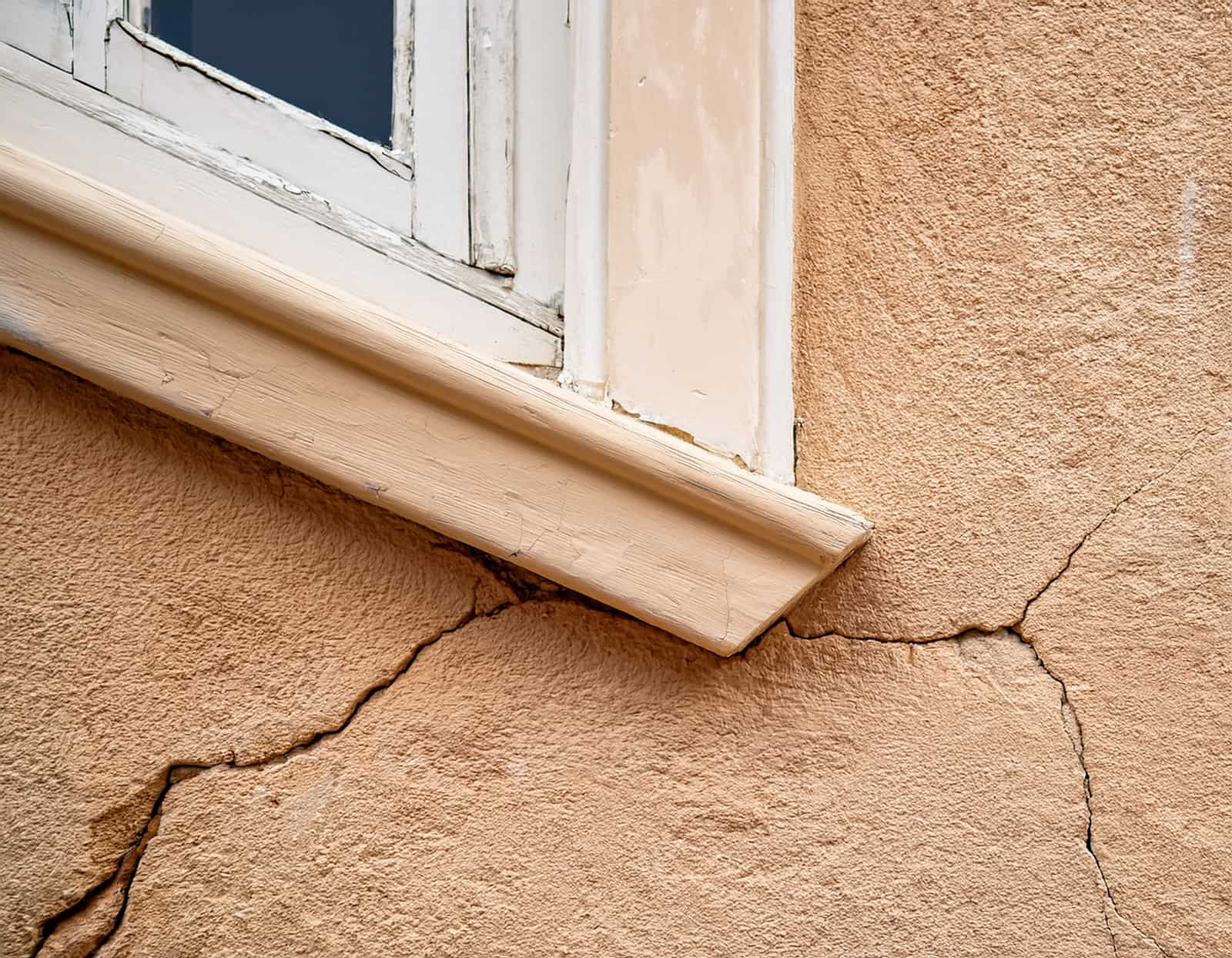
Diagonal cracks that start at the corner of a window or a door are common, because the corners of an opening concentrate stress.
4. Mark the ends
Draw a pencil line across the crack at each end, write the date, and take a photo with a coin or a ruler next to it.
5. Did it pass the marks?
Check it again in a few weeks and after a freeze and thaw. If the crack has passed the pencil marks, it is moving.
6. A stain suggests water
A stain running down from a crack, a soft or bubbling area, or a crack that is damp after rain suggests water is getting in.
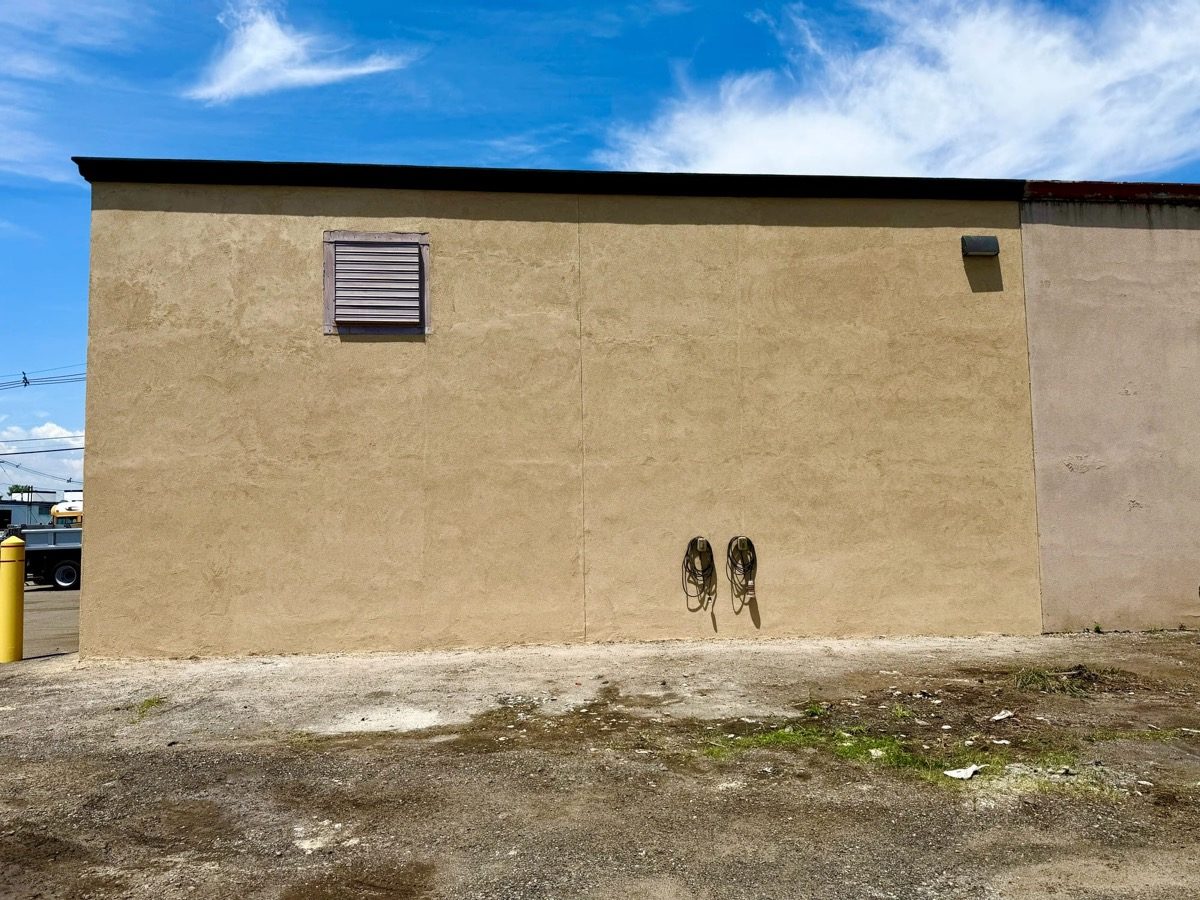
 AI-generated illustration
Hairline cracks
Stucco shrinks a little as it cures, and fine cracks are a normal result.
Many of them appear within the first few years and then stay the same. If a crack is thin, the same width along its length, and dry on both sides, it is usually a surface matter.
A crack under about one sixteenth of an inch is generally treated as cosmetic. These cracks are usually sealed with a flexible material and the wall is recoated, which keeps water out and hides the line.
Map cracks
A web of fine cracks across an area is usually in the finish coat or a thin top layer, not deep in the wall.
It is generally surface shrinkage and cosmetic.
These do not usually mean the wall is moving. A recoat of the area, with the surface cleaned and any loose material removed, is a common fix. Where the finish is sound underneath, we do not tear it off to deal with a pattern in the surface.
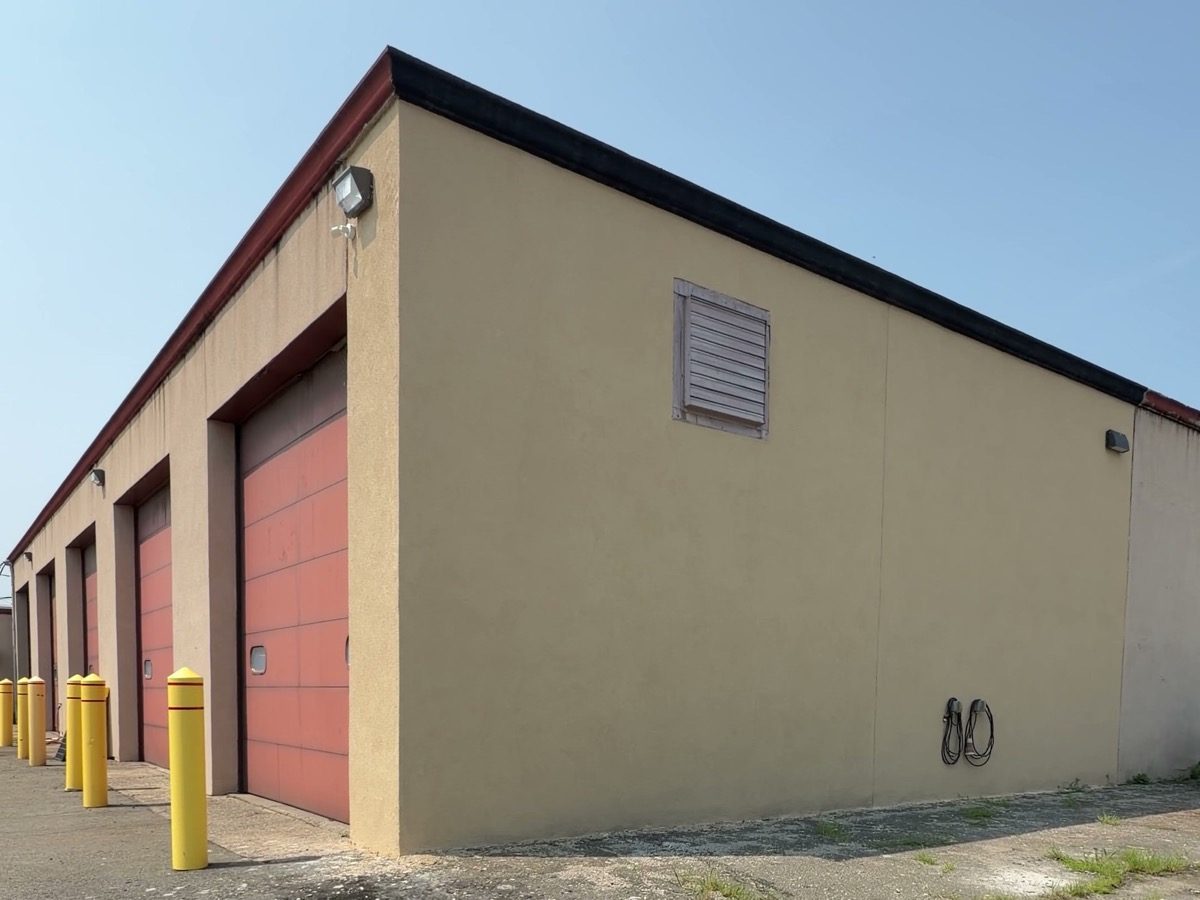 Our work
Cracks that mean something
Diagonal cracks that start at the corner of a window or a door are common, because the corners of an opening concentrate stress.
Many are stable. A crack that is wide, that is wider at one end, that steps along the joints of a block wall or that keeps growing is more serious, and it may mean something behind the wall is moving.
As a rule of thumb, a crack wider than about one eighth of an inch, or one that is visibly wider than it was a few weeks ago, deserves a closer look at the wall behind it, not just a patch on the surface. A patch over a moving crack opens again.
A stain running down from a crack, a soft or bubbling area, or a crack that is damp after rain suggests water is getting in. That is the case where waiting costs the most, because water that gets behind a coating stays there.
How to watch a crack
If you are not sure, mark it. Draw a pencil line across the crack at each end, write the date, and take a photo with a coin or a ruler next to it.
Check it again in a few weeks and after a freeze and thaw. If the crack has passed the pencil marks, it may be moving. If not, it may be stable.
The one to worry about is a crack that keeps getting wider over time.
Do this on the crack you worry about most, and leave the others. Keep the photos together. They are useful when someone comes to look at the wall, because they show how fast things are changing.
How cracks are repaired
A stable crack is cleaned, filled with a flexible material and recoated to match.
A larger area of damage is cut back to sound material, patched in layers, with mesh worked in at the repair so the patch holds, and refinished. A patch will show if the texture or color is not matched, so the finish matters as much as the repair underneath.
If the wall is sound but tired, the better answer may be a clean and recoat of the whole elevation, which keeps the existing stucco and gives one even finish. Whether the wall needs that depends on what we find when we look at it up close.
Whatever the cause turns out to be, a few photographs taken in daylight, one wide shot and one close up with a coin or a tape measure beside it for scale, make a first opinion far more useful. Note when you first saw the problem and whether it has changed since, because a change over weeks or months says more than a single look.
See itIllustrates section 06: How cracks are repaired
Watch it happen
How a crack is repaired
A stable crack is filled and the wall recoated; a larger area of damage is cut back to sound material and patched in layers.
1. Filled with a flexible material
A stable crack is cleaned, filled with a flexible material and recoated to match.
2. Recoated to match
The wall is recoated to match, which keeps water out and hides the line.
3. Larger damage is cut back
A larger area of damage is cut back to sound material.
4. Patched in layers, then refinished
It is patched in layers and refinished. A patch will show if the texture or color is not matched, so the finish matters as much as the repair underneath.
Step 3 of 3
Act on it
Quick answers, where to read next, and how we can help.
Questions people ask
Do all stucco cracks need to be fixed?
No. Fine hairline and map cracks are often cosmetic. They are worth sealing so water does not get in and the finish looks even, but they are not an emergency.
How can I tell if a crack is getting worse?
Mark both ends with a dated pencil line and photograph it next to a coin or ruler. Check again in a few weeks and after a hard freeze. If it has grown past the marks, it may be moving.
Why do cracks start at the corners of windows?
The corners of an opening concentrate stress, so that is where a wall tends to crack first. Many of these stay small. A wide or growing one needs a look at what is behind it.
Can I just caulk a stucco crack?
A flexible sealant can close a fine, stable crack. Sealing over a crack that is moving or that has water behind it hides the problem, and the crack will open again.
Will the repair show?
It can if the texture or color is not matched. A good patch is blended into the surrounding finish, and sometimes the cleanest answer is to refinish the whole wall face so there is no visible edge.
Seeing this at your place?
Send us a few photos through the contact page and the chat there, and we'll tell you what we think.
Request an estimateOur stucco and EIFS repair workAll guides
Enduring On Construction, a New Jersey general contractor. NJ home improvement contractor registration 13VH13745900.
