Bergen County, New Jersey
General contractor in Carlstadt, NJ
Carlstadt, NJ
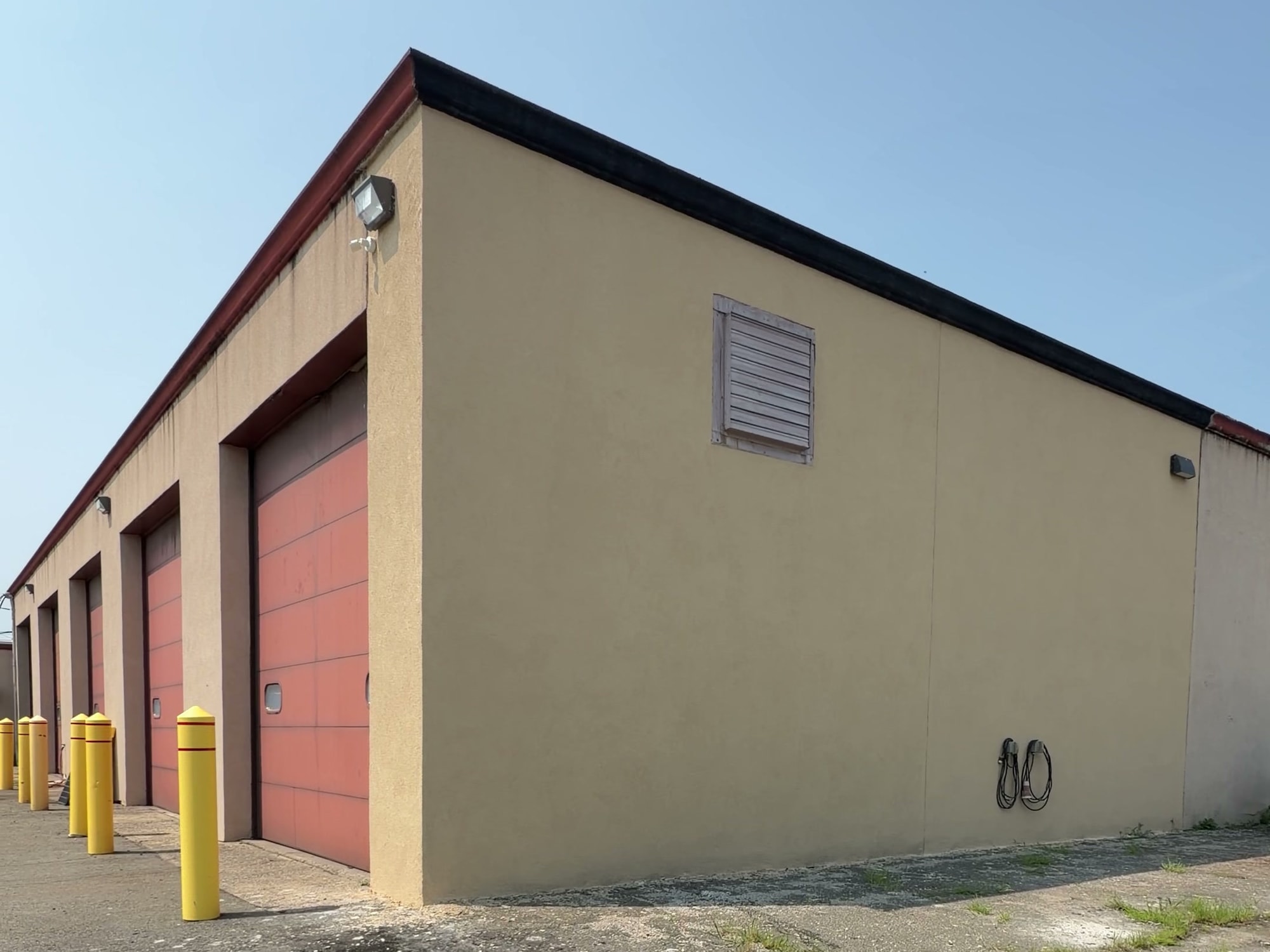
Enduring On completed exterior stucco work on a Borough of Carlstadt public works facility, taken on as a subcontract to the general contractor holding the Borough's own contract. Enduring On was not contracted by the Borough of Carlstadt directly, and this page does not represent otherwise. Carlstadt sits in Bergen County, one of the six counties Enduring On works in.
The failure behind the job was water getting in behind the stucco. That moisture rusted the wire lath holding the base coat to the wall, and once lath corrodes enough it pulls away from the substrate and takes the base coat with it. That is the way a stucco wall typically fails from the inside out, and it stays invisible until the wall is already coming off the building -- which is the condition this job started from.
A municipal job carries a constraint a private one does not: the Borough was permitted to spend a fixed amount, and that number did not move. Rather than re-skin the whole building to fix the failure, Enduring On saw-cut the trim and cut around the failed stucco to segment the wall -- isolating the damaged section from the sound stucco around it instead of demolishing work that did not need to come off. Elevated access and keeping the facility in operation throughout shaped how that segmented work was sequenced, stripping and recoating the isolated section rather than opening the whole elevation at once.
The isolated section was repaired and tied into the existing stucco system: the wall was power washed in full, every nail hole was removed, and new wire lath, a new base coat and a new stucco finish went on over the repaired area, with the architectural molding finished to match and the trim painted black.
One part of the finish did not come out right partway through the job. Rather than patch it and leave a visible line where the new work met the old, Enduring On put a fresh finish across the full wall so it read as one continuous surface rather than a patch.
Municipal work also carries a different standard for verification: more than one party checks it. Enduring On met with the Borough's inspector and with state engineers over the course of the job, and the work was inspected repeatedly rather than once at closeout.
A residential grid next to one of North Jersey's largest industrial districts
Carlstadt was formed as a village in 1860 and incorporated as a borough in 1894, one of 26 boroughs that split off across Bergen County that year during the wave known locally as "Boroughitis." What it became afterward is unusual even for the county: an established residential community sits directly beside one of North Jersey's largest industrial, warehouse and transportation districts, both inside the same small borough. That split matters to how a job is scoped here -- a property on the residential side follows the borough's standard zoning and construction code review through its Construction / Zoning / Planning department, while a property on the industrial side often sits inside a separate regional land-use jurisdiction, described below.
The residential side is zoned to stay as it is
Carlstadt's own zoning ordinance sets its principal residential district up to preserve the pattern, quality and architectural character of the borough's existing detached one- and two-family homes, and to discourage the subdivision or demolition that would change that pattern -- a second district applies the same protective purpose to streets where larger houses are the norm. A corner residential lot carries its own setback rule, measured to the center line of the street it fronts, separate from the setbacks that apply to an interior lot. None of that governs the public works facility this page's job was performed on, but it is exactly what shapes an exterior job on the residential side of the same small borough.
Part of Carlstadt answers to a second land-use authority
A portion of Carlstadt's industrial area lies inside the Hackensack Meadowlands District, and land use there is governed by the Meadowlands Regional Commission, formed when the former New Jersey Meadowlands Commission merged into the New Jersey Sports and Exposition Authority in 2015. The borough's own zoning code states this directly: any dispute over a zoning district boundary on a property inside that jurisdiction is resolved against the Commission's official map, not the borough's own zoning map alone. A project on Carlstadt's industrial side is checked against both authorities before it is scoped -- the public works facility this page's job was performed on sits in the borough's civic and industrial-adjacent area, which is why elevated access and an occupied facility, not a zoning question, were what drove the sequencing.
Carlstadt's flood risk is tidal, not river-based
Carlstadt's industrial area sits low in the Meadowlands basin, and its flood risk runs on tides rather than a river cresting. A tide gate on Berry's Creek near Teterboro Airport and tide gates installed on the Moonachie and Bashes Creeks in 2010 specifically protect the Carlstadt industrial area east of Washington Avenue from storm-surge and daily tidal flooding. Properties in Special Flood Hazard Areas inside the Meadowlands District have also been eligible for a 15 percent discount on National Flood Insurance Program policies since 1992, through the district's own participation in FEMA's Community Rating System. A building's flood zone status and elevation requirements are checked against the current FEMA mapping before any addition, at-grade work or new construction is priced on a Carlstadt property, industrial or residential.
New construction on the industrial side triggers a different review
A straight repair and replace scope like the stucco system replacement on this page's job is reviewed as construction, not as a land use change. New construction, an expansion, or a subdivision of an industrial or warehouse property in Carlstadt is a different matter: the borough's Land Subdivision and Site Plan Review ordinance routes that kind of project through the Planning Board (or, for a use the ordinance does not permit, the Zoning Board of Adjustment) before a building permit is even in play. Knowing which of those two tracks a project falls on, before it is scoped, is what keeps a Carlstadt project moving on schedule.
One construction agency, five subcode officials
Carlstadt's own code establishes a Building Construction Agency made up of a Construction Official and separate subcode officials for building, plumbing, electrical and fire protection, plus any others the state requires. On a job that touches an occupied municipal or industrial building, the fire protection subcode official's review is not a formality on top of the others -- an occupied building keeps its required egress and life-safety systems in service while exterior work is underway, which is coordinated with that office before scaffolding or access equipment goes up, not after.
How a job runs with Enduring On in Carlstadt
Work on an occupied facility in Carlstadt, whether municipal or industrial, is scoped around keeping the building functioning: sections are opened, finished and closed before the next section starts, access equipment is planned around the site's actual working hours, and the permit and inspection path is confirmed with the borough's Construction Official (and, where the property falls inside the Meadowlands District, the Commission) before the first section comes down. That sequencing, not a faster tear-off, is what let the public works facility on this page stay in operation for the full length of the job, through to the final inspection that closed it out.
Questions about building in Carlstadt
Is my Carlstadt property in the Meadowlands District?
Part of the borough's industrial area is; the residential grid generally is not. The borough's Construction / Zoning / Planning department can confirm which jurisdiction a specific property falls under before a project is scoped.
Does exterior work on an occupied building need special sequencing?
When the building has to stay open or operating throughout, yes -- work is planned in sections rather than opened all at once, which is how the stucco replacement on the Carlstadt public works facility above was run.
Can an existing home in Carlstadt's residential district be subdivided or torn down?
The borough's own zoning ordinance states the opposite intent for its principal residential districts: preserving the pattern and character of existing detached homes and discouraging subdivision or demolition. A property owner considering either one confirms the specific district's rules with the Zoning Board of Adjustment before planning the project.
Does a repair job need Planning Board approval the way new construction does?
No. A repair and replace scope on an existing structure, like the stucco system replacement on this page's job, is reviewed as construction under the borough's Construction Official, not as a land use change under the Planning Board. Planning Board review applies to new construction, an expansion or a subdivision, not to restoring an existing building's exterior.
Projects in Carlstadt
Send us the job
Drawings, or a building that needs work. We will come and look at it with you.

Enduring On LLC, license, registration and contact details
Contractor
Enduring On Construction
Enduring On LLC · New Jersey general contractor
Home improvement
13VH13745900
NJ Div. of Consumer Affairs
Public works
753861
NJ Dept. of Labor
New home builder
0058509
NJ Dept. of Community Affairs
Based
Clark, New Jersey
Telephone
(908) 887-3118Fully insured, with certificates and additional-insured endorsements issued on request. Registered with the New Jersey Department of Labor to perform public work at prevailing wage.
Verifiable with the State of New Jersey