Step 1 of 3
Understand it
The short answer, then why it happens.
The short answer
Repair is the right call when the damage is in one area, the cause has been found and fixed, and the wall behind is dry and sound. Replacement is the right call when the damage or moisture shows up across several areas, the material is brittle or can no longer be matched, or the barrier and flashing behind the siding are failing along the whole wall. The decision comes from what is behind the boards and why they failed, not from how bad they look.
Start with the cause, not the damage
Two houses can show the same cracked board for entirely different reasons.
On one, a ladder hit the wall. On the other, water has been running behind the siding for years and the crack is just where it finally showed. Repairing the board fixes the first house and does nothing for the second.
So the first question is why. Is there a gutter overflowing onto the wall, a window with no flashing, a bed of soil piled against the bottom course? If the cause is still active, any repair will fail again. Finding it is worth more than choosing the product.
When a repair is the right answer
A repair is sensible when the problem is contained.
A few boards were damaged by impact, a corner was knocked loose, or a short run was never fastened properly. The wall behind them is dry when probed and the sheathing is sound. Replacing a limited number of boards and fixing the detail that failed solves the issue.
The honest limit of a repair is appearance. Siding fades and weathers, so new boards stand out against old ones. Using boards from a hidden side of the house or accepting a small color difference are the usual answers. If the owner minds the difference more than the cost of doing the whole wall, that points the other way.
Step 2 of 3
See it
Each picture sits right after the section it explains.
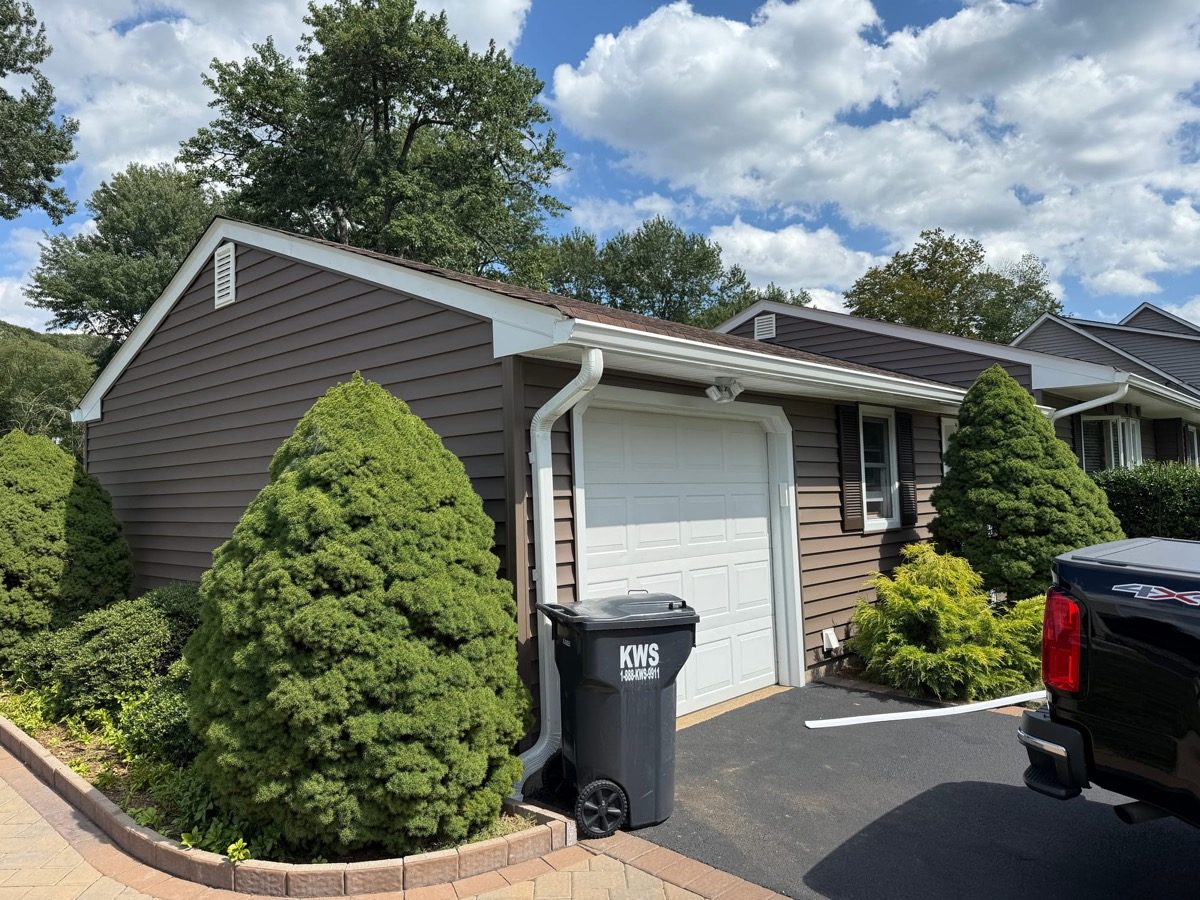
See itIllustrates section 02: When a repair is the right answer
Watch it happen
Repair or replace: what the wall tells you
A leak that shows only as a stain, a contained problem on dry sound wood, damage across the wall, one opened section, a repair of the failed detail, and a patch over a wall that is still wet.
1. Start with the cause, not the damage
Two houses can show the same cracked board for entirely different reasons. On one, a ladder hit the wall. On the other, water has been running behind the siding for years and the crack is just where it finally showed.
2. When a repair is the right answer
A repair is sensible when the problem is contained. The wall behind it is dry when probed and the sheathing is sound.
3. When replacement is the better route
Moisture at several windows, soft trim along a whole side, and sheathing that is wet in more than one spot all suggest the barrier and flashing have failed across the wall.
4. Open one section and look
Where we can, we remove one section of siding to see what is behind it. That shows the sheathing, the barrier and the flashing directly.
5. Fix the detail that failed
Replacing a limited number of boards and fixing the detail that failed solves the issue.
6. The cost of choosing wrong
A patched wall that is still wet keeps rotting behind the new boards.
When replacement is the better route
Replacement makes sense when the damage is not isolated.
Moisture at several windows, soft trim along a whole side, and sheathing that is wet in more than one spot all suggest the barrier and flashing have failed across the wall. Patching each spot treats the symptom and leaves the system that is leaking.
It also makes sense when the siding itself has reached the end of its life. Vinyl that cracks when touched, a style that is no longer made so repairs never match, or boards with widespread surface failure cannot be repaired in a way that holds. In those cases new siding, with the barrier and flashing renewed, is the longer lasting answer.
How we make the call on site
We look at the whole house, not only the area you point at.
We probe the trim and the lower boards, check the flashing details we can reach, and use a moisture meter where the wall might be wet. We also look at the gutters and the grade, since those are common sources.
Where we can, we remove one section of siding to see what is behind it. That shows the sheathing, the barrier and the flashing directly, and it is far more reliable than judging from outside. We show you what we find, whether the news is good or bad, so the decision is yours and not ours.
What to do before you decide
Take photos of every wall in daylight, with close ups of damaged areas, trim at windows and the bottom course.
Note where interior stains or smells appear. Send them with your address and we can give you a first read.
Avoid covering a suspect area with a quick patch or sealant before someone has looked. It hides evidence and can trap moisture. A short delay for a proper look is cheaper than redoing a wall twice.
The cost of choosing wrong
Repairing something that needed replacing is the more expensive mistake, even though it feels like the careful one.
A patched wall that is still wet keeps rotting behind the new boards. By the time the damage shows again, the sheathing and the framing may have gone with it, and the job has grown into something larger than the one you avoided.
Replacing something that needed only a repair is the other mistake, and it is a waste of a sound wall. That is why we would sooner open a small section and look than guess in either direction. A good decision here is usually made with a screwdriver, a meter and an hour on site, not at a desk.
If you are weighing the two, the simplest test is this. If you can name one cause and one area, and the wall behind is dry, repair. If you cannot name the cause, or the symptoms are on several walls, plan on replacement and use the quote to find out exactly how much of the wall has to come off.
Step 3 of 3
Act on it
Quick answers, where to read next, and how we can help.
Questions people ask
Can I replace just the damaged siding?
Often yes, if the damage is local and the wall behind is dry. The repair then comes down to matching, since new boards will not look like old ones at first.
How do I know whether the wall behind is wet?
A probe on the trim and sheathing and a moisture meter reading give the answer. Interior stains, peeling paint on an exterior wall and a musty smell are signs worth reporting.
Will new siding match the old?
Rarely perfectly. Color, sheen and texture change with age, and some styles are discontinued. A hidden side of the house is the best place to borrow boards from.
Is replacement always the safer long term choice?
Not always. A contained problem with a known cause is fixed by a repair. Replacement is for problems that are spread across the wall or for siding that has reached the end of its life.
Do you do both repair and replacement?
Yes. We repair siding and replace it, including vinyl and fiber cement, and we decide which after we look at the wall.
Seeing this at your place?
Send us a few photos through the contact page and the chat there, and we'll tell you what we think.
Request an estimateAll of our construction servicesAll guides
Enduring On Construction, a New Jersey general contractor. NJ home improvement contractor registration 13VH13745900.
