Step 1 of 3
Understand it
The short answer, then why it happens.
The short answer
Siding is the outer layer. It sheds most of the water, and what gets past it is meant to be stopped by the wrap and flashing behind it. The signs that water has got through often show first at the trim, corners, below windows and near the bottom of the wall: soft or dark trim and corner boards, boards that bow or lift, stains and peeling paint on the inside of an exterior wall, and a musty smell. If you see them, the wall behind the siding should be checked before anything is replaced or painted.
Start at the bottom and at the openings
Water damage on a wall is rarely random.
Windows, doors and places where something goes through the siding, such as a hose bib, a light or a vent, are the best documented entry points. Corners and the bottom edge of the wall near the ground are also worth checking.
Those are the places to look first. Walk the house slowly and look at each of them, from the ground, with a flashlight held at an angle to the wall so that any waviness shows up in the light.
Step 2 of 3
See it
Each picture sits right after the section it explains.
See itIllustrates section 01: Start at the bottom and at the openings
Watch it happen
Where siding water damage starts, and how to check
The places water goes first, the stained trim it leaves, a screwdriver test on the trim, the missing wrap and flashing behind, and a repair limited to one window.
1. Start at the bottom and at the openings
Water damage on a wall is rarely random. It starts where water is most likely to get in or to sit: around windows and doors, at the corners, at the bottom edge of the wall near the ground.
2. What to look for on the outside
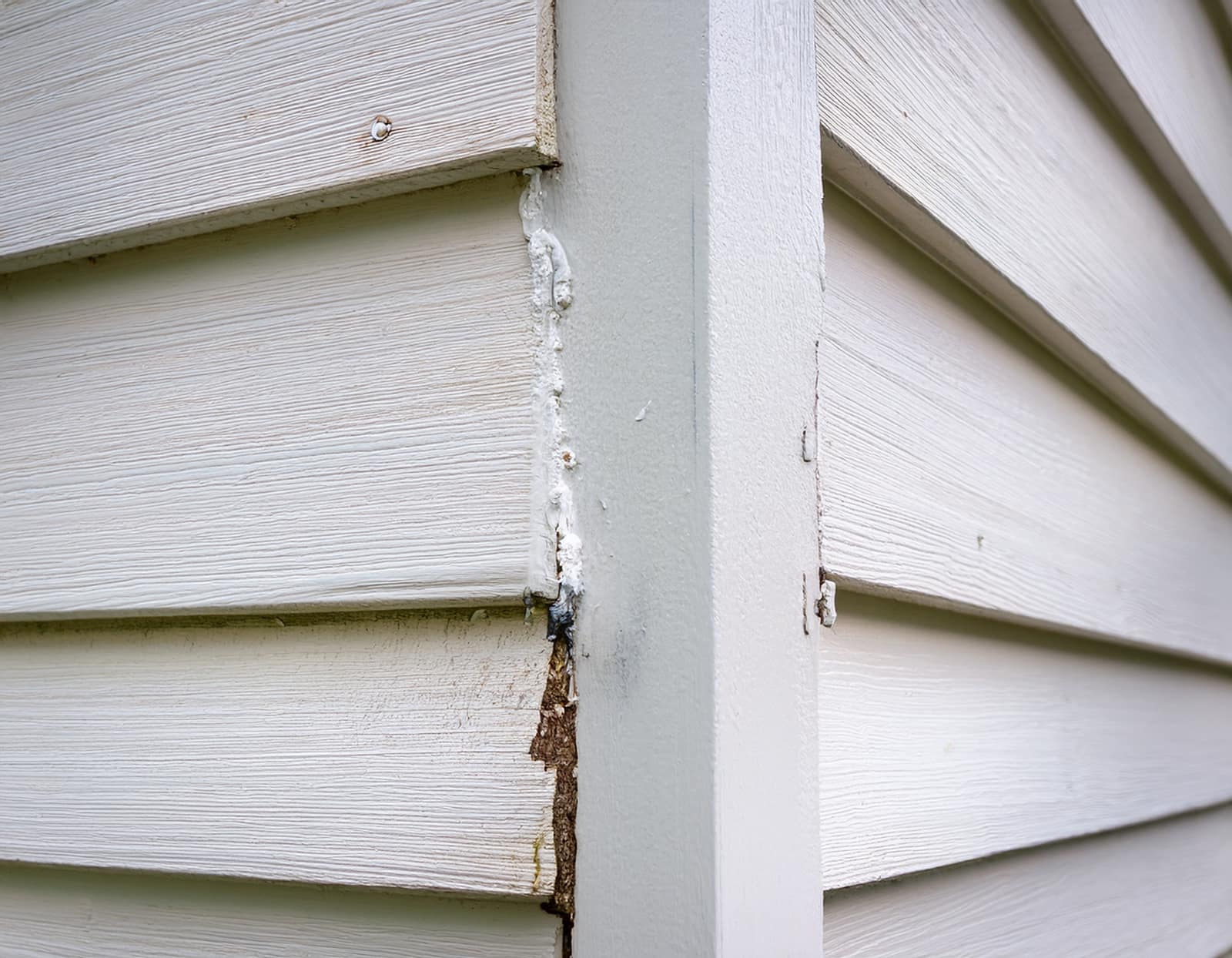
Trim and corner boards that are dark, soft, cracked or that have paint lifting off them are the most common early sign. Look at the bottom ends of the boards, where water collects.
3. A safe way to check
Press a screwdriver lightly into the lower part of a corner board or a window trim board. Sound wood resists. Rotted wood gives, and the tip goes in easily.
4. Why the wrap and flashing matter
Behind the siding there is a layer of house wrap, and around every window and door there is flashing. When those are missing, torn or put on in the wrong order, a small leak runs down the inside of the wall for a long time before anyone sees it.
5. One window, one opening
If the damage is at one window and the rest of the wall is dry, the work can be limited to that opening: the siding comes off, the wet material is cut out, the wrap and flashing are redone and the siding goes back.
What to look for on the outside
Trim and corner boards that are dark, soft, cracked or that have paint lifting off them are often an early sign.
Look at the bottom ends of the boards, where water collects.
Siding boards that bow outward, bulge or have come loose near a window or at the bottom of the wall can mean the wall behind is wet or rotted. Gaps that open at the joints, stains running down from a corner and moss or algae growing on one spot of a wall that is otherwise clean point the same way.
Not every wave is water. Vinyl siding often waves from heat or from being nailed too tightly, and that is a different problem. A wave that sits in one area near a window, with other signs beside it, is the one worth checking.
What to look for on the inside
Water behind an exterior wall often shows inside before it shows outside.
Look for paint that bubbles or peels on an exterior wall, a stain that spreads on a ceiling below a wall, wallpaper lifting, a musty smell in a closet on an outside wall, or baseboards that swell.
None of these proves the siding failed. They are a reason to look at the outside wall that lines up with them, because the cause is often directly on the other side.
A safe way to check
Press a screwdriver lightly into the lower part of a corner board or a window trim board.
Sound wood resists. Rotted wood gives, and the tip goes in easily. Do this gently and in a spot that will be covered or painted afterward, because a probe leaves a mark.
A moisture meter is a better check, because it reads the wall without damaging it. A contractor will usually bring one. Photograph what you find, including the date, because a record of how far it has spread is useful.
Do not pull siding off yourself to look. It is easy to tear the wrap behind it or bend the boards so they do not go back.
Why the wrap and flashing behind the siding matter
Siding is meant to shed water, not to be watertight.
Behind it there is a layer of house wrap, and around every window and door there is flashing, which is a strip of material that directs water out over the siding instead of into the wall. When those are missing, torn or put on in the wrong order, a small leak runs down the inside of the wall for a long time before anyone sees it.
That is why the repair has to start with finding where the water gets in. Replacing the boards over a wet wall, or painting over a stained trim, covers the symptom and leaves the cause. The wrap and flashing should be put right as part of the work, before the new siding goes on.
Repair or replace
If the damage is at one window and the rest of the wall is dry, the work can be limited to that opening: the siding comes off, the wet material is cut out, the wrap and flashing are redone and the siding goes back. If the damage runs across a wall, or moisture is found in several places, the wall is stripped and rebuilt, and at that point replacing the siding is the sensible choice.
When the old boards come off, that is the moment to look at the wall behind them: the sheathing, the wrap and the flashing. A repair that skips that look can leave the leak in place, so ask any contractor how and when the wall will be checked.
Step 3 of 3
Act on it
Quick answers, where to read next, and how we can help.
Questions people ask
How do I know if the wall behind my siding is wet?
Look for soft or dark trim, bowed boards, stains and peeling paint inside an exterior wall, and a musty smell. A moisture meter confirms it without taking anything apart.
Is a wavy vinyl siding board a sign of water damage?
Not usually on its own. Vinyl waves from heat and tight nailing. It becomes a concern when it sits beside soft trim, stains or a musty smell, because the same area may be wet.
Can I paint over damaged trim?
Painting over rotted or wet wood covers it and does not stop it. The trim should be checked, the wet material removed or replaced and the cause found first.
Where does water usually get in?
Most often around windows and doors and at holes for pipes, lights and vents. Corners, the bottom of the wall, and spots where a gutter or roof edge sends water against the wall are also worth checking.
Do I need to replace all the siding?
Not always. If the damage is limited to one opening and the rest of the wall is dry, a limited repair can work. If moisture shows up across the wall, replacing the siding is the better route.
Can I send photos instead of having someone come first?
Yes. Photos of each elevation, close-ups of any damaged trim and the address are enough for a first read. A first read from photos is only a first read, and the wall should still be checked in person before a repair is priced.
Seeing this at your place?
Send us a few photos through the contact page and the chat there, and we'll tell you what we think.
Request an estimateAll of our construction servicesAll guides
Enduring On Construction, a New Jersey general contractor. NJ home improvement contractor registration 13VH13745900.
