Step 1 of 3
Understand it
The short answer, then why it happens.
The short answer
Exterior paint peels for one of two broad reasons: it never bonded to the surface, or moisture got behind it and pushed it off. The place it peels and what you see under the flake tell you which. Paint coming away in sheets from clean-looking wood or a previous coat points to poor bonding. Paint failing at the bottom of a wall, at the ends of trim or around windows points to water. The fix is different for each, and painting over it again fixes neither.
Look at where it peels
The pattern across the house is your first clue.
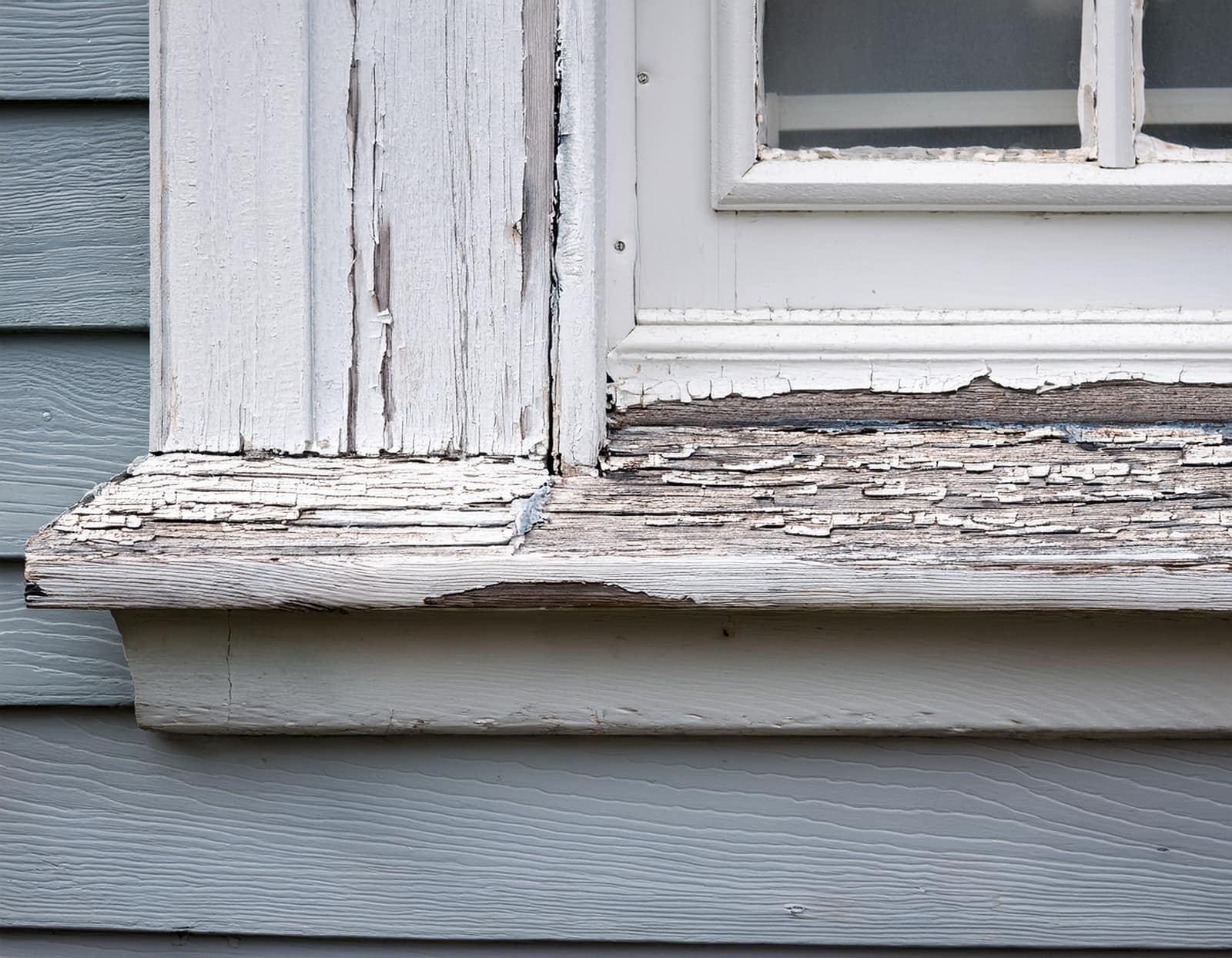
Peeling that is worst on the sides that get the most sun can point to sun and heat wearing the paint out, since sun-exposed sides often weather faster. Peeling concentrated at the bottom of a wall, at the ends of trim boards, under window sills or near gutters points to moisture.
Peeling spread evenly with no pattern, on a wall that is otherwise dry, points to something wrong at the time of painting, such as a dirty or chalky surface, paint put on over gloss without being prepared, or paint applied in poor conditions.
Look at what is under the flake
Pick up a flake that has already come off.
Look at the back of it and at the surface where it was. If the flake is clean on the back and the surface under it is clean, the paint did not stick, and the problem is adhesion.
If the back of the flake is stained or damp-looking, if the wood under it is gray, dark or soft, or if there is mildew on the surface, water got there first. If the new coat came away and left an older coat intact, the bond between the layers failed, which often means the old surface was chalky, glossy or dirty when it was repainted.
Which layer separates shows where the bond failed: if the primer comes away with the paint, look at how the primer bonded to the surface, and if a clean primer coat is left behind, look at how the topcoat bonded to the primer.
Step 2 of 3
See it
Each picture sits right after the section it explains.
See itIllustrates section 02: Look at what is under the flake
Watch it happen
Watch paint that never bonded let go
A painted wall in section. A tape test shows the film has lost its grip, then the paint comes away in sheets and leaves the primer behind.
1. It never bonded, or water got behind it
Exterior paint peels for one of two broad reasons: it never bonded to the surface, or moisture got behind it and pushed it off.
2. A simple test of whether the paint still grips
Press a piece of strong tape firmly onto the paint, rub it down and pull it off sharply. If paint comes away on the tape, the film has lost its grip even where it still looks fine.
3. Paint that leaves a clean primer coat
If it leaves a clean primer coat behind, the topcoat did not bond to the primer.
4. Why repainting over it fails
Loose paint is scraped back to a sound edge, rough areas are sanded, dirt and chalk are washed off, bare wood and repaired areas are primed, and gaps are sealed.
Other patterns and what they suggest
Blisters, which are bubbles in the paint, usually come from moisture or heat under the film.
Cut one open: if it is wet, the moisture is coming from behind.
Cracking in a pattern like reptile skin, often called alligatoring, tends to come from a coat applied too thick, a hard coat put over a flexible one, or recoating before the last coat was dry. The surface moves, and the film does not.
A chalky white powder that comes off on your hand when you rub the wall is the paint breaking down in the sun. A new coat over chalk will not stick unless the chalk is washed off first or a suitable primer is used.
A simple test of whether the paint still grips
Choose a clean, dry area that looks sound.
The standard version, a scored tape test, is to cut a small grid through the paint with a blade, press strong tape firmly over it, rub it down and pull it off sharply. If paint comes away on the tape, the film has lost its grip even where it still looks fine. If little or nothing comes off, the paint is holding in that area.
Test a few places, including a sunny wall and a shaded one. The results tell you whether the problem is local, which suggests a repair, or general, which suggests the whole surface needs preparing before a new coat.
Why repainting over it fails
New paint cannot hold better than what it is stuck to.
Painting over loose paint, chalk, mildew or damp wood means the new coat peels along with the old, sometimes within a season, and takes the cost of the paint with it.
Preparation is the largest part of an exterior paint job. Loose paint is scraped back to a sound edge, rough areas are sanded, dirt and chalk are washed off, bare wood and repaired areas are primed, and gaps are sealed. Only then does the finish go on. That is why a short quote for a long list of work is worth questioning.
When the cause is water
If the peeling is from moisture, the source has to be found: a gutter that overflows onto the wall, a downspout that discharges against it, a failed seal around a window, trim that has rotted at its ends, or siding that has let water behind it. Paint cannot hold on a surface that stays wet.
That is the point where the job becomes repair and then painting. Rotted trim is replaced, joints are sealed, the water source is dealt with, and the surface is allowed to dry before it is primed. We handle the repair and the painting together, so the paint is not applied over a problem that is still active.
See itIllustrates section 06: When the cause is water
Watch it happen
Watch paint fail where water gets in
A painted wall in section. Paint at the bottom of the wall lets go over wet, dark wood where moisture has come in from behind.
1. Water
Peeling concentrated at the bottom of a wall, at the ends of trim boards, under window sills or near gutters points to moisture.
2. Stained or damp-looking underneath
If the back of the flake is stained or damp-looking, if the wood under it is gray, dark or soft, or if there is mildew on the surface, water got there first.
3. Paint cannot hold on a wet surface
Paint cannot hold on a surface that stays wet.
Step 3 of 3
Act on it
Quick answers, where to read next, and how we can help.
Questions people ask
Why is my paint peeling in less than five years?
Early peeling usually means the surface was not prepared well, or there is moisture behind the paint. Look at where it peels and what is under the flake to tell which.
Is peeling paint always a sign of rot?
No. Many cases are adhesion failures from dirt, chalk or gloss on the old surface. Peeling at the bottom of a wall, trim ends or around windows is the pattern that points to moisture and is worth checking for rot.
Can I scrape and repaint just the peeling spots?
You can for a small, sound area with no moisture. Scrape to a firm edge, sand, prime the bare areas and paint. If the surrounding paint is also loose, the new patch ends up with an edge that peels again.
Which side of the house fails first?
The sides that get the most sun often weather faster, because heat and sunlight wear the paint down.
Do I need to strip the whole house?
Not usually. Loose paint is removed back to a sound edge, and the remaining paint is cleaned and sanded so the new coat bonds. Stripping to bare wood is for walls where most of the paint has failed.
Seeing this at your place?
Send us a few photos through the contact page and the chat there, and we'll tell you what we think.
Request an estimateOur exterior painting workAll guides
Enduring On Construction, a New Jersey general contractor. NJ home improvement contractor registration 13VH13745900.
