Step 1 of 3
Understand it
The short answer, then why it happens.
The short answer
Paint failure on an exterior often starts at the joints, not on the flat walls. A gap at a window casing, a trim corner or a board end lets water into the wood behind the paint, and the paint peels from the inside. Sealing those joints with the right paintable caulk, after cutting out the old, is part of any lasting repaint. Old window glazing that has dried and fallen out is the same kind of gap. Some joints are meant to drain, so check the siding or window maker's installation instructions before sealing.
Why a joint matters more than a wall
A flat painted wall sheds water.
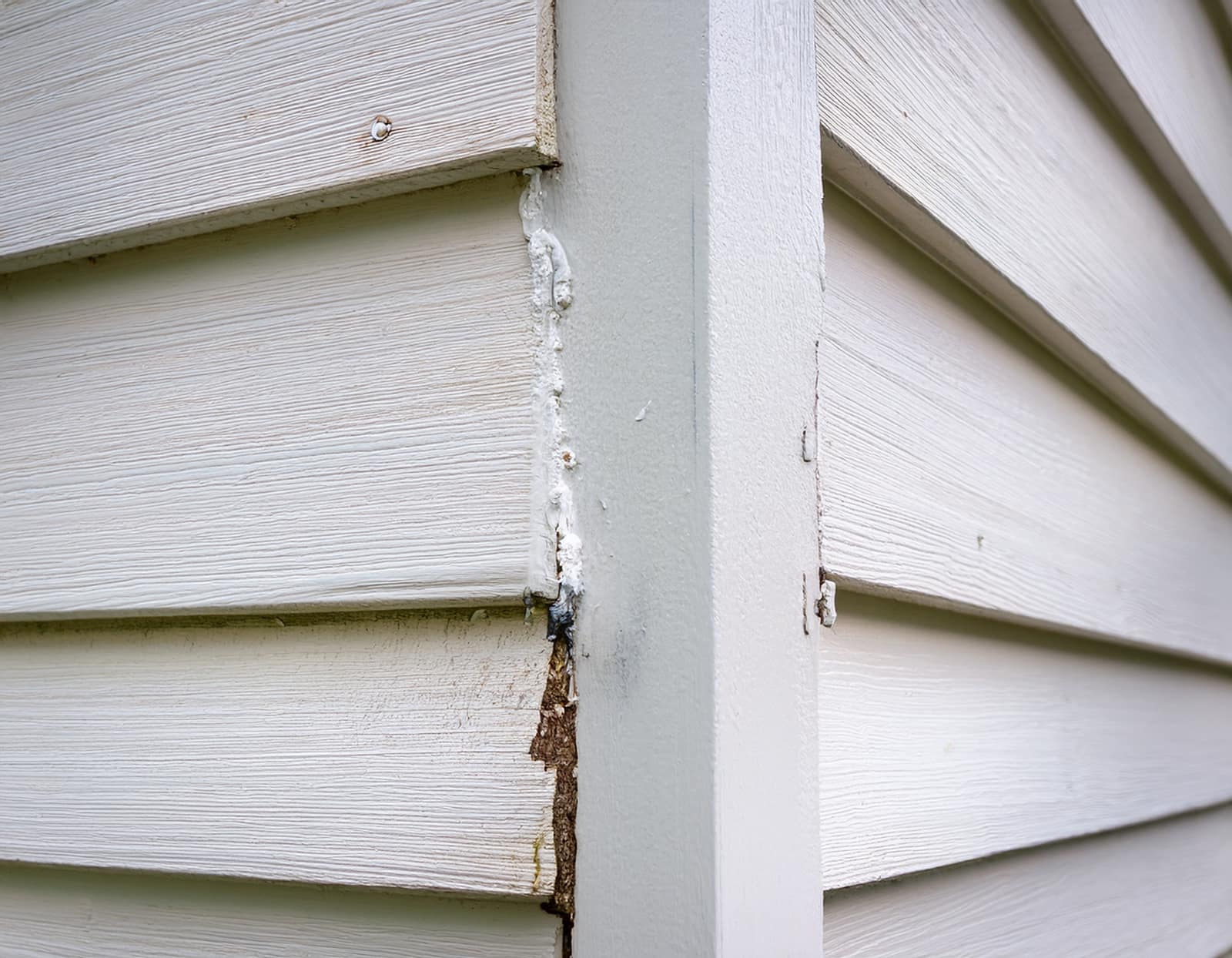
A joint does not, because it is a seam where two pieces meet and movement happens. Trim shifts against siding, window casings against the wall, boards against each other. When the seam opens even slightly, rain runs in and wood end grain, which absorbs water far faster than the face, soaks it up.
The wood swells, pushes the paint, and the film lets go. What looks like paint peeling around a window is often a joint that stopped sealing years earlier. Fixing the paint without fixing the joint repeats the problem.
Step 2 of 3
See it
Each picture sits right after the section it explains.
See itIllustrates section 01: Why a joint matters more than a wall
Watch it happen
Watch water enter an open joint, then the joint get sealed
A wall with an open joint beside the corner board. Rain runs into the gap and soaks the end grain; the joint is then caulked and painted.
1. Why a joint matters more than a wall
A flat painted wall sheds water. A joint does not, because it is a seam where two pieces meet and movement happens.
2. When the seam opens
When the seam opens even slightly, rain runs in and wood end grain, which absorbs water far faster than the face, soaks it up.
3. Doing it properly
The bead is tooled into the joint so it sticks to both sides and sheds water, then painted once it has cured as directed.
4. How it fits into a repaint
Caulking comes after washing, scraping, repair and priming, and before the finish coats.
Where the gaps are
The usual places are around window and door casings, where trim meets siding, at the corners of the house, where trim boards meet each other, at the ends of boards, and where fixtures such as lights and pipes pass through the wall. Anywhere two different materials meet, they move at different rates, and the joint between them works loose.
Walk the house with a screwdriver in hand. A joint that has pulled away from one side, a caulk bead that has split or shrunk, or a dark line of staining at a seam is telling you the water has been getting in.
Choosing the caulk
Exterior caulks are not interchangeable.
Acrylic latex caulks are easy to use and paint well but flex less. Siliconized acrylic and polyurethane products flex more and last longer in joints that move. Pure silicone flexes very well but generally will not take paint, which makes it a poor choice for a joint that will be painted.
The label tells you what it is rated for, whether it is paintable, and how soon it can be painted. A cheap caulk that shrinks and cracks in two years undoes a good paint job. The joint, its width and its movement decide the product, which is why the choice is made at the wall rather than in advance for the whole house.
Doing it properly, and the joints you should not seal
Old caulk that is cracked, shrunk or pulling away is cut out and removed, not caulked over, since new caulk will not bond to failed caulk.
The joint is cleaned and left dry. On bare wood, a coat of primer first helps the caulk grip.
A gap too wide for caulk to span, generally wider than about a quarter inch, needs a backer rod pushed in first or a repair of the trim, because a thick bead of caulk shrinks and cracks as it cures. The bead is tooled into the joint so it sticks to both sides and sheds water, then painted once it has cured as directed.
Not every gap is a defect. Some joints are designed to let water out or air through, such as weep openings and drainage paths. The siding or window maker's installation instructions show which ones. Sealing a drainage joint shut can trap water inside the wall, so check before filling it.
If you are not sure whether a gap is meant to be there, check the maker's instructions or ask before filling it. A painter who caulks every line on the house without thinking about drainage can do harm.
Glazing on old wood windows
On older wood windows the glass is held in with glazing compound, a putty that sets in the rabbet around each pane.
Over the years it dries, cracks and falls out in pieces. That leaves an open path for water into the sash, and the paint on the sash rails fails fast.
The repair is to remove the loose compound, prime the bare wood, press in fresh glazing and paint it, carrying the paint slightly onto the glass so the seal is complete. Check the glazing compound's label for the right lap and cure time. It is slow, careful work, and a good reason to look at the windows before the quote is agreed. Replacing the windows is a separate job and not something this guide covers.
How it fits into a repaint
Caulking comes after washing, scraping, repair and priming, and before the finish coats.
Done in that order, the new caulk sticks to a sealed surface and is covered by the paint, which protects it from sun. Done afterward, caulk sits on top of the paint and looks like an afterthought.
If a quote for a repaint does not mention caulking and glazing at all, ask where it is in the scope.
A last check is to walk the house a year later, on a dry day, and look closely at each joint. A good bead is still flexible, still bonded on both sides and still covered or painted evenly. Small failures found early are a quick fix with a tube and a steady hand, while the same failure left through a few winters can let water into trim and sheathing that is far more work to repair. Keep a note of which product went into which joint so that any future touch-up uses the same material.
Step 3 of 3
Act on it
Quick answers, where to read next, and how we can help.
Questions people ask
How often does exterior caulk need replacing?
It depends on the product and the joint. Look for splits, shrinkage, or places where it has pulled from one side. A cracked bead has stopped doing its job, whatever its age.
Can I caulk over old caulk?
It is better to cut out the old caulk. New caulk does not bond well to failed caulk, and the joint ends up thicker and more likely to crack.
Why won't paint stick to some caulk?
Pure silicone caulk generally rejects paint. For a joint that will be painted, use a caulk labelled as paintable.
Should I caulk the bottom of my siding?
Not without checking the siding maker's installation instructions. Some details are meant to drain, and sealing them shut can trap water.
What is glazing compound?
It is the putty that holds glass into an old wood window sash. When it dries and falls out, water reaches the sash and the paint on it starts to fail.
Seeing this at your place?
Send us a few photos through the contact page and the chat there, and we'll tell you what we think.
Request an estimateOur exterior painting workAll guides
Enduring On Construction, a New Jersey general contractor. NJ home improvement contractor registration 13VH13745900.
