Step 1 of 3
Understand it
The short answer, then why it happens.
The short answer
In a brick wall, the mortar is meant to be the weaker and more porous material, so that it wears out before the brick does. A joint is cheap to redo. A brick face is not. When a hard, cement-heavy mortar is packed into a wall of soft old brick, the brick takes the stress the joint should have taken, and the faces start to flake while the new mortar looks perfect.
What the mortar is actually for
Most people see mortar as glue.
It does bond the units, but its other job is to be the part of the wall that gives. Brick and mortar both swell a little when they are wet and shrink as they dry, and both move with the temperature. A wall is never perfectly still, and something has to take up that movement.
The usual understanding among masons is that the joint should be that something. Mortar is also more porous than brick, so water that gets into the wall tends to travel out through the joints and evaporate there. A well matched joint wears slowly over decades. When it finally goes, you repoint the joint and the brick behind it is untouched.
What goes wrong when the mortar is harder
Brick that is old and soft, which is common on older New Jersey houses, was usually laid in a mortar with a lot of lime in it.
That mortar was soft on purpose. Over the years it erodes, and someone decides the wall needs repointing.
The problem starts when the replacement is a hard, cement-heavy mix, because cement is easy to buy and mixes the same way every time. The new joint is now stiffer than the brick on either side of it. Water can no longer leave through the joint as easily, so it leaves through the brick face. Freezing and thawing then do their work on the face, and movement concentrates at the brick edges. The usual sign is that the joints look sharp and sound while the brick next to them is flaking, rounded at the edges or missing a layer.
The wall has not failed because the mortar is weak. It has failed because the mortar is stronger than the thing it was supposed to protect.
Step 2 of 3
See it
Each picture sits right after the section it explains.
See itIllustrates section 02: What goes wrong when the mortar is harder
Watch it happen
Why the mortar should be the softer part
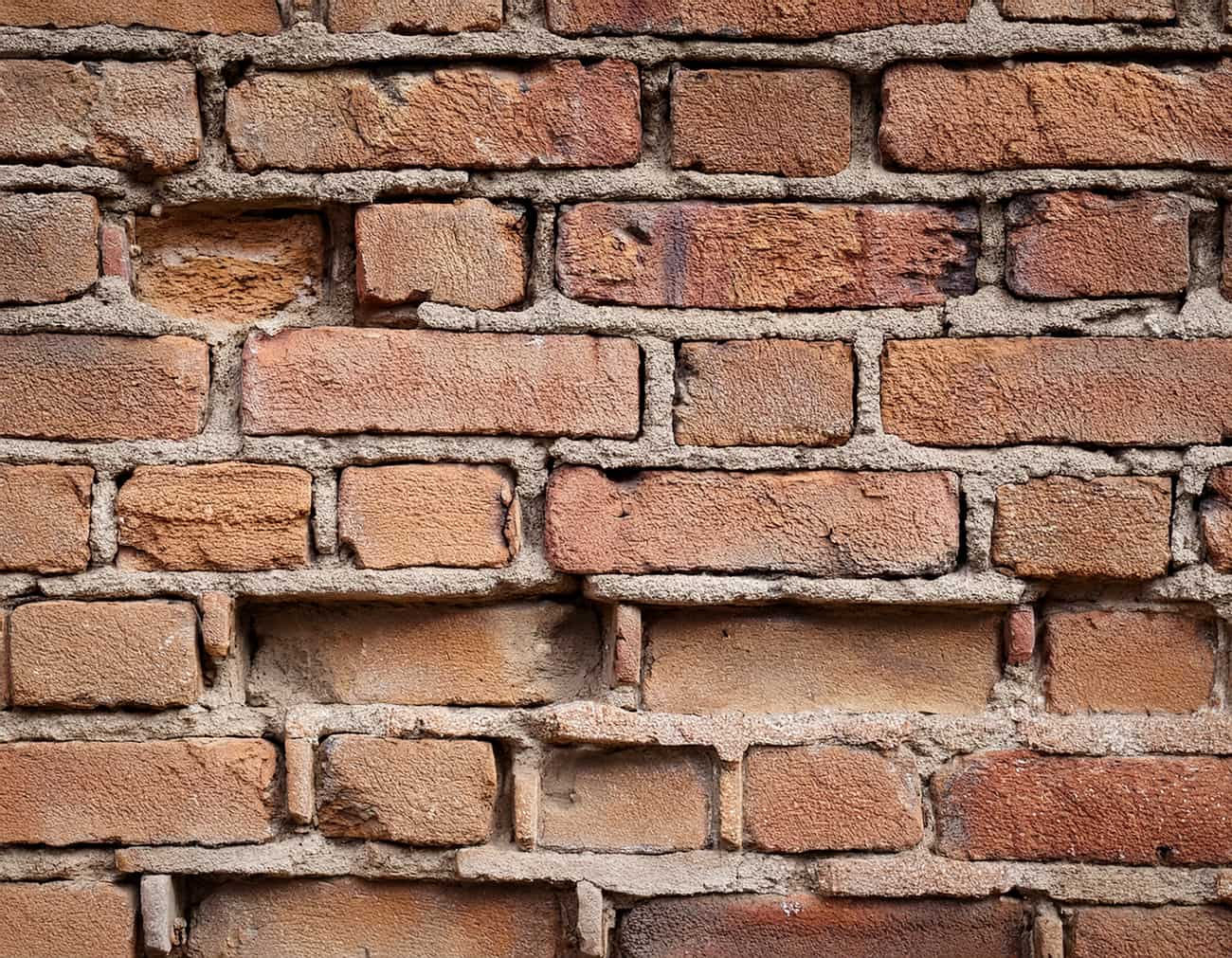
A brick wall where soft mortar wears first, then the same wall repointed with hard mortar, where the brick faces start to flake.
1. The part that gives
The joint should be the part of the wall that gives. A well matched joint wears slowly over decades, and the brick behind it is untouched.
2. A harder mortar
The problem starts when the replacement is a hard, cement-heavy mix. The new joint is now stiffer than the brick on either side of it.
3. Water leaves through the brick
Water can no longer leave through the joint as easily, so it leaves through the brick face.
4. The faces flake
The joints look sharp and sound while the brick next to them is flaking, rounded at the edges or missing a layer.
5. Cut out and repoint
The old mortar is cut out to a depth, about twice the width of the joint as a rule of thumb, and the new mortar is packed in layers and then tooled to match the profile of the original.
How to check your own wall
You can learn a lot from the ground.
Look at the joints in the lower few feet, where you can get close. Mortar that is sandy and crumbles when you rub it may be an older, softer mix, and mortar that is gray, smooth and hard may be a harder, newer one. This is only a rough clue, so a mason should confirm it.
Then look at the brick beside the hard joints. Flaking faces, small pits and edges that have broken away next to a tight joint are the pattern to look for. A single area proves little. The same pattern repeated across several courses, or on one whole side of the house, is worth a closer look.
Do not pick at the wall to test it. Raking out sections to see what is behind them opens the wall to water, and it is better done by someone who can close it back up the same day.
What a correct repoint looks like
Good repointing starts with a test.
The mortar is matched to what is already in the wall, in strength, in color and in the way it is tooled. On a wall of soft brick that means a softer mix than most people expect. When it makes sense, a small test patch lets you see the color and the finish before the whole wall is done.
The old mortar is cut out to a depth, about twice the width of the joint as a rule of thumb, and the joint is cleaned of dust. The new mortar is packed in layers and then tooled to match the profile of the original. Cutting only the surface and smearing new mortar over the old does not bond and will fall out within a few seasons.
Where a joint is tight and the brick next to it is already damaged, the repair may include replacing individual bricks. That is a separate decision from the pointing, and it is made brick by brick on site.
When the harder mortar is already in the wall
If a previous repair used a hard mortar and the brick is already flaking, there is no quick answer.
The usual approach is to cut the hard mortar out carefully, without widening the joint or chipping the brick, and to repoint with a mix suited to the brick. That is slow, careful work, and it is the reason a repoint done well costs more time than one done fast.
It is also worth finding out why the wall is wet. Mortar and brick last far longer when water has a way to drain. If a gutter is overflowing onto the wall, or a downspout empties against it, fixing the joints without fixing the water will bring you back to the same wall in a few years.
What this means before you hire anyone
Ask whoever quotes the work how they decide what the mortar will be.
A good answer talks about the brick, the existing mortar and, where it makes sense, a test patch. A poor answer is a single product used on every job. Ask to see a finished repoint on a similar house, and look at the brick beside the joints as well as the joints themselves.
Our own masonry work is described on the masonry repair page. If you send photos of the wall, we will tell you whether it looks like a repoint, a partial rebuild or a wall to leave alone.
Step 3 of 3
Act on it
Quick answers, where to read next, and how we can help.
Questions people ask
Is harder mortar stronger and therefore better?
Not on old brick. A wall works as a system, and the strongest material in it takes the least movement. If the mortar is stiffer than the brick, the brick faces absorb the stress, and that is the part you cannot easily replace.
How do I know if my mortar is too hard for my brick?
Look for sharp, sound joints next to brick that is flaking or rounding at the edges, repeated across several courses. A sandy, crumbly joint may be an older soft mix, and a smooth gray joint may be a harder one. A photo sent to us is enough for a first opinion.
Can I repoint a small area myself?
A small, low area with sound brick is a reasonable thing to try if you cut the old mortar out deep enough and match the mix. Above the first floor, or where the brick is soft, the risk is a patch that fails or damages the brick. We would rather look before you start.
Does repointing stop water getting in?
It helps keep rain out of the joints, but it does not cure a wall that is wet for another reason, such as a gutter spilling onto it or water rising from the ground. Those need to be found and fixed or the new joints will wear out early.
Will new mortar match the old color?
It can be matched closely, but it will look different at first because fresh mortar is lighter and weathers over a season or two. A small test patch, when one makes sense, lets you judge the color before the full wall is done.
Seeing this at your place?
Send us a few photos through the contact page and the chat there, and we'll tell you what we think.
Request an estimateOur masonry repair workAll guides
Enduring On Construction, a New Jersey general contractor. NJ home improvement contractor registration 13VH13745900.
