Step 1 of 3
Understand it
The short answer, then why it happens.
The short answer
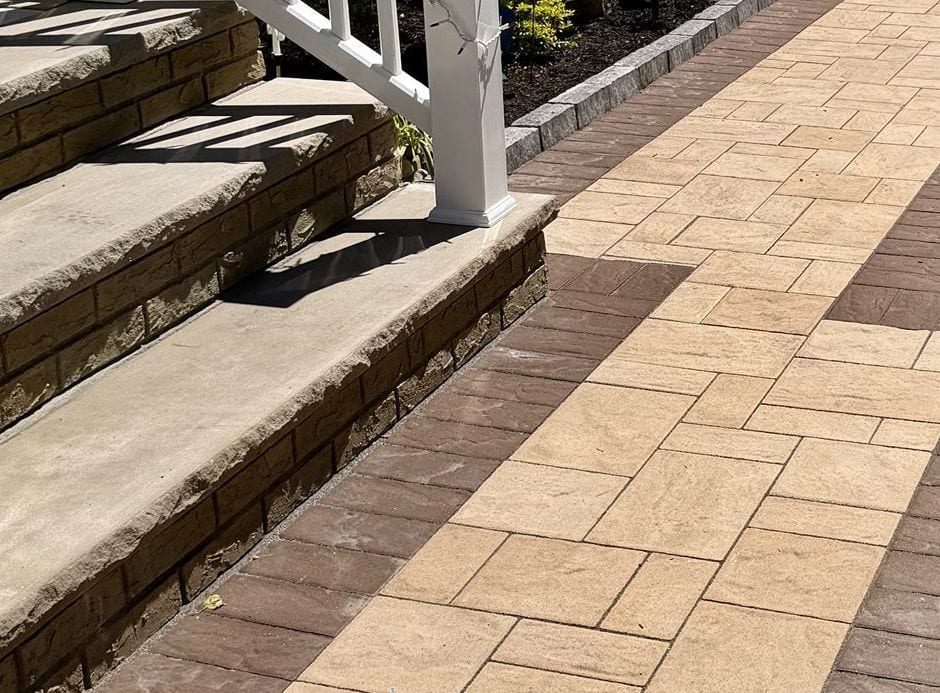
Pavers beside a house must fall away from it. A small, steady slope, a fraction of an inch for each foot, carries rain off the surface and away from the foundation. A walkway or stoop that is flat, or that has settled toward the house, collects water at the wall, where it soaks the soil and finds a way into the basement. The slope is set in the base before a single paver is laid, and downspouts must have somewhere else to go.
Why paving by the house is a drainage structure
Anything built beside a foundation either helps keep water away or helps bring it in.
A walkway, a stoop and the paving around steps are large, hard surfaces that collect every drop that lands on them. Where that water goes is a design decision, whether anyone made it on purpose or not.
Water that ends up next to the foundation wall soaks the soil there, loads the wall with pressure and works its way into joints and cracks. A good deal of what looks like a leak inside the house starts as a low spot outside it.
 Our work
How much slope, and which way
The slope is small. A fall of a fraction of an inch per foot is enough to move water without making the surface feel tilted underfoot.
It runs away from the house, so rain on the walk flows to the lawn or the street and not to the wall.
The slope has to be built into the base. Pavers set on a flat base and then wedged to tilt will not hold their angle. The correct method is to shape the compacted stone to the final fall, then screed an even bed of sand over it, so the pavers sit on a surface that already slopes the right way.
Step 2 of 3
See it
Each picture sits right after the section it explains.
See itIllustrates section 02: How much slope, and which way
Watch it happen
Slope is built into the base
The compacted stone is shaped to the final fall, the sand bed goes on over it, and the pavers sit on a surface that already slopes the right way.
1. Shape the stone to the fall
The correct method is to shape the compacted stone to the final fall, so rain flows away from the house.
2. Screed an even bed
Then screed an even bed of sand over it.
3. Pavers on a sloping surface
The pavers sit on a surface that already slopes the right way.
Stoops and landings
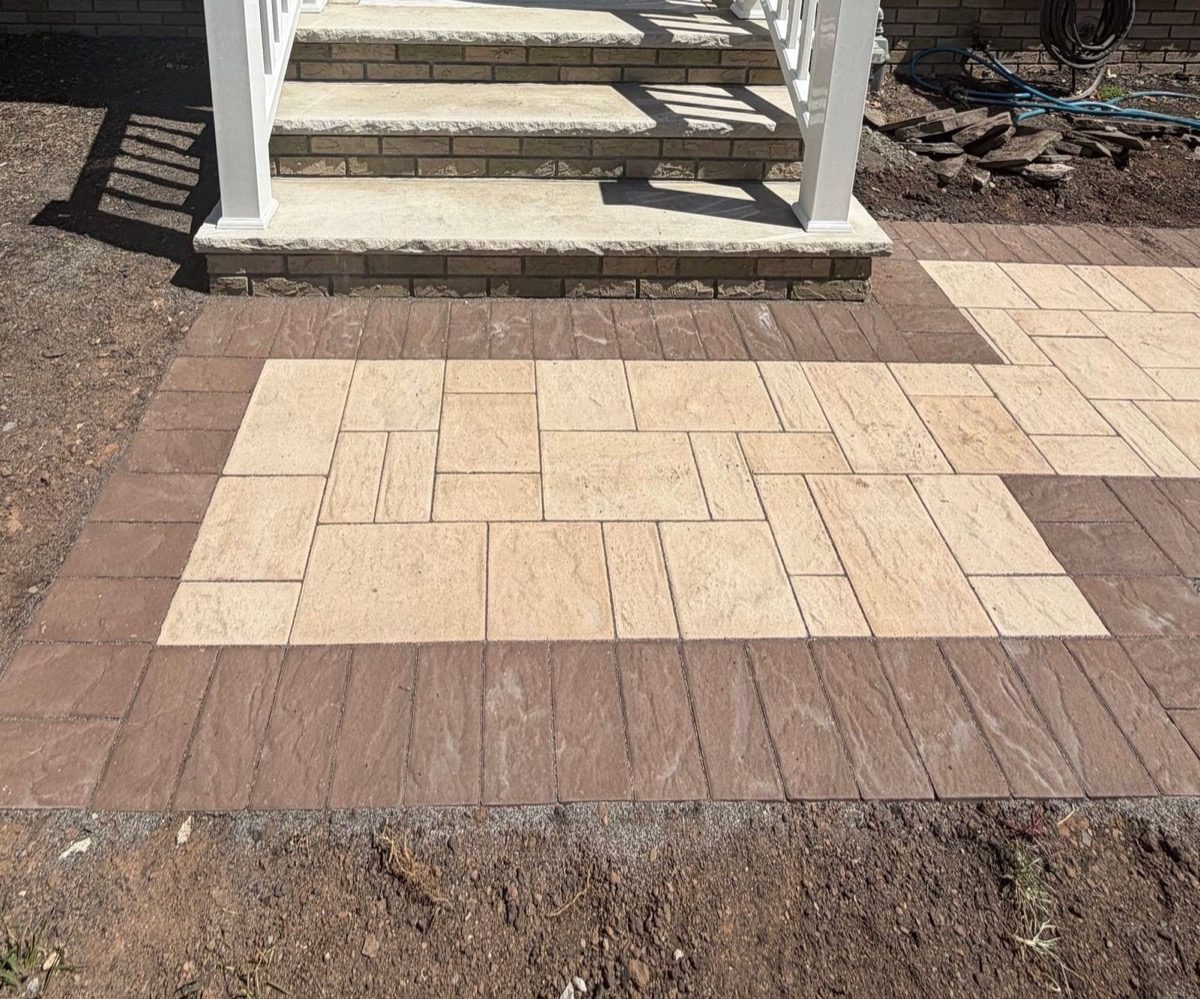
A stoop is trickier than a walk, because it is small, it butts against the house and it usually sits on backfill.
The soil beside a foundation was dug up when the house was built and put back, and fill that was not well compacted settles for years. A stoop built on it can slowly sink toward the wall.
That is the common pattern: the stoop pitches back toward the door, water pools at the threshold and the joint along the house opens. A stoop needs a base built deeper than the walk beside it, a fall away from the door, and a gap or flexible joint where it meets the house so that settling does not shear the wall.
Downspouts and where roof water goes
The biggest source of water at a walkway is often the roof.
A downspout that discharges onto or beside paving sends a large volume to one spot, and the water finds the lowest line, which is often the joint beside the foundation.
Part of a walkway job is looking at where each downspout ends. It may need an extension, a splash block or a pipe that carries the water out to a place where it can drain. Paving that is built perfectly will still fail if a gutter is dumping onto it.
Joints, sand and what water does to them
Water that sits on a walk works into the joints and slowly washes out the sand.
The pavers lose their lock and begin to rock. Where water runs under the surface it carries away bedding sand from under the pavers and leaves voids.
If you see low spots with standing water after rain, or joints that keep losing sand along one side, those are the first signs that the surface is not shedding water the way it should.
See itIllustrates section 05: Joints, sand and what water does to them
Watch it happen
What water does to a walkway
Water works into the joints, carries sand away, leaves voids, and the surface settles into low spots.
1. A walk that sheds water
A correct slope sends water to the lawn.
2. Water in the joints
Water that sits on a walk works into the joints and slowly washes out the sand.
3. Voids under the surface
Where water runs under the surface it carries away bedding sand from under the pavers and leaves voids.
4. Low spots and standing water
The pavers lose their lock and begin to rock. Low spots with standing water after rain are the first signs.
How to check your own walkway
After a hard rain, go out and look.
Is water standing anywhere on the surface? Does it flow toward the house, or away? Is there a gap between the paving and the foundation that is holding water? A level held against the surface, or even a marble placed on it, will tell you which way it falls.
A settled walkway can usually be lifted, the base rebuilt to the right fall and the same pavers laid back. If the problem is larger than the paving, such as water entering the basement, we will tell you so before suggesting any paving work.
Call when the slope is wrong, when a stoop is moving, or when water is entering the house near a walkway. We handle paver and hardscape work and can look at whether the problem is in the paving or in what feeds it.
Send a few photos and a note about when the water shows up, and we will tell you what we think is going on.
If you are planning a new walkway or stoop, start with the water. Walk the property in a rainstorm if you can and see where the roof water goes, where the lawn is wet and where the ground slopes. The route of a walkway and the way it falls should work with that, not fight it.
Then think about the junctions. Where a walk meets a driveway, steps or the house, the heights and falls have to line up, so nothing creates a trip edge or a trap for water. A small change in the first few inches of excavation is cheap, and the same change after the pavers are down means taking everything up.
We would rather walk the site with you than draw a line on a plan. Send us photographs and a note of what you want, and we will say where we think the water will go and how to make it behave.
Step 3 of 3
Act on it
Quick answers, where to read next, and how we can help.
Questions people ask
Can I fix a tilted walkway by adding sand under the low side?
Only as a short term patch. Sand compresses and washes out, so the dip returns. A lasting fix rebuilds the stone base to the right fall.
Should pavers touch the foundation?
They should not be pinned against it with no allowance for movement. A small gap with a flexible filler lets the paving and the house settle independently without cracking either.
Why does water pool at my front stoop after rain?
Usually because the stoop has settled toward the house, or the fall was never enough. The soil beside a foundation is often loose fill that compresses, and the stoop follows it down.
Do I need drains in a paver walkway?
Often not. A correct slope sends water to the lawn. A drain becomes useful where water has no outlet, such as a low walkway between a house and a retaining edge.
Will new paving fix a wet basement?
New paving can stop making it worse, and fixing a slope that sends water to the wall can help. But a wet basement has several possible sources, and paving is only one of them. We would look at the whole picture first.
Can pavers be used on a steep walkway?
Yes, with care. Steeper runs need a firmer edge, a base that resists sliding and a surface that grips when wet. Where the slope is steep enough, steps with level landings are often the safer design.
Seeing this at your place?
Send us a few photos through the contact page and the chat there, and we'll tell you what we think.
Request an estimateOur masonry and hardscape workAll guides
Enduring On Construction, a New Jersey general contractor. NJ home improvement contractor registration 13VH13745900.
