Step 1 of 3
Understand it
The short answer, then why it happens.
The short answer
Spalling is when the outer face of a brick flakes, peels or pops off, leaving a rough, pitted or hollow spot. The usual cause is water inside the brick that freezes and expands, helped along by a mortar that is harder than the brick, a coating that traps moisture, or a constant source of water such as an overflowing gutter. It stops when the water source is fixed and the damaged bricks are replaced with a matching unit. Replacing bricks alone, without finding the water, does not.
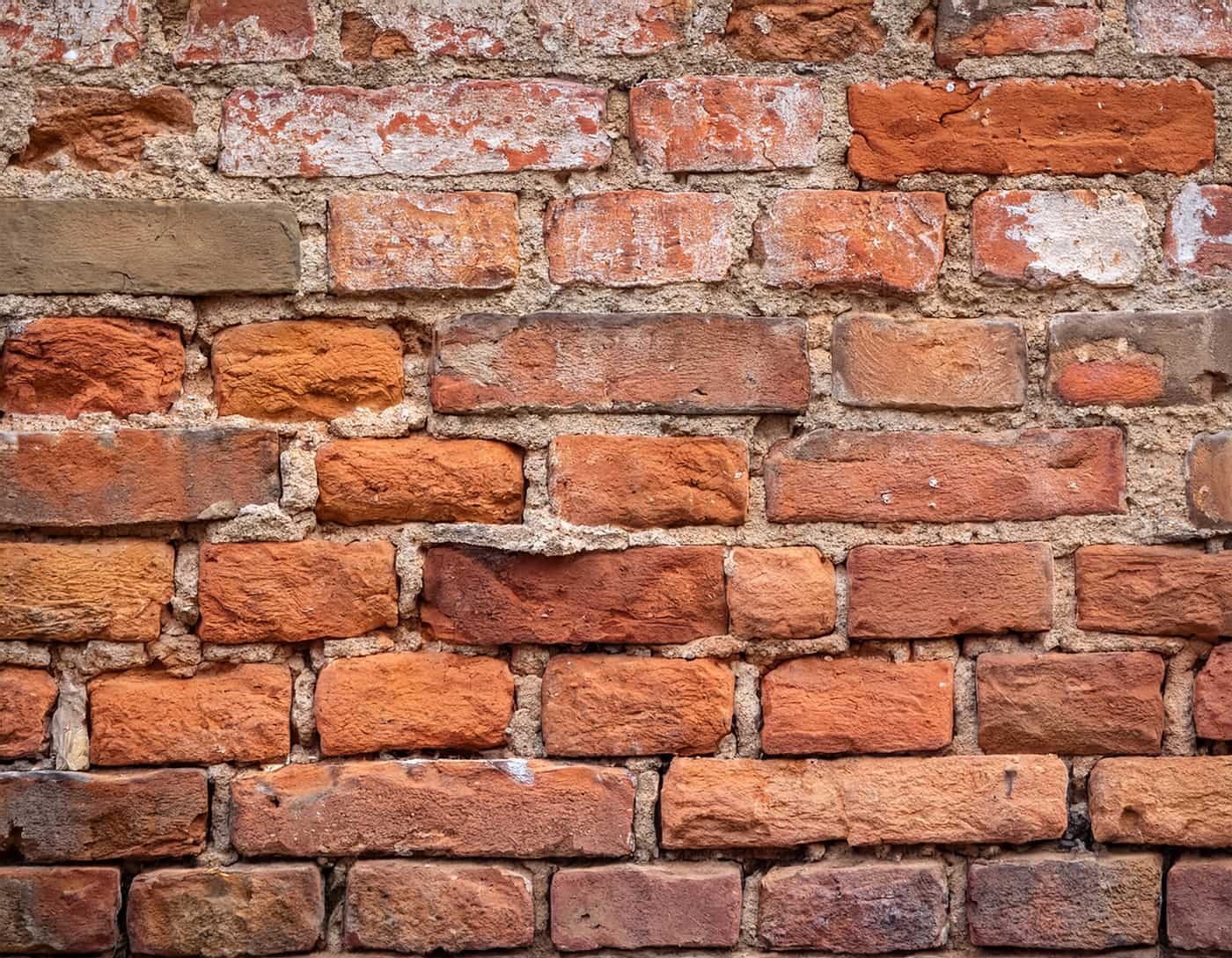
What spalling looks like
The brick surface is a hard, fired skin.
Under it, the brick is softer and more porous. When the skin breaks, you see the softer material, which is usually a different color, often a pale pink or tan against a darker face. The break can be a shallow flake the size of a coin, a patch the size of a hand, or a whole face gone so the brick looks scooped out.
Pieces of the brick face on the ground, or in the flower bed, below a wall are a clear sign. So is a brick that sounds hollow when you tap it with a knuckle, or one where the face is visibly lifting at the edge. The damage is often in patches, which tend to be where the wall is wettest, not evenly spread across the whole wall.
It is worth separating spalling from surface dirt, efflorescence and normal weathering. Efflorescence is a white powder on the surface that wipes off. Normal weathering softens the edges slowly over decades. Spalling is a loss of material, and it keeps getting worse in the places it starts.
Step 2 of 3
See it
Each picture sits right after the section it explains.
See itIllustrates section 01: What spalling looks like
Watch it happen
Why a brick face spalls and how it is fixed
A brick wall with faces flaking off at the base, the water and mortar behind it, and a damaged brick cut out and replaced.
1. What spalling looks like
The brick surface is a hard, fired skin. When the skin breaks, you see the softer material underneath. Pieces of the brick face on the ground below a wall are a clear sign.
2. Water and frost
A brick stays wet and then freezes. Water expands as it turns to ice, and if the ice forms just under the surface, it pushes the face off.
3. Hard mortar makes it worse
If the joints are stiffer than the brick, the water that would normally leave through the joints leaves through the brick face instead.
4. Cut out the damaged brick
A badly spalled brick is cut out.
5. Set a matching brick
A matching unit is set in fresh mortar, and the joints around it are tooled to match.
Why it happens: water and frost
Brick absorbs water. That is normal, and a healthy wall dries out again between rains.
The trouble comes when a brick stays wet and then freezes. Water expands as it turns to ice, and if the ice forms just under the surface, it pushes the face off. A winter of repeated freezing and thawing does this over and over.
That is why spalling is a cold-climate problem and why it shows up in the spring, when the winter's damage becomes visible. It also tends to concentrate where the wall stays wet: at the base where water splashes up from the ground, under a window sill that sheds water onto the brick, below a gutter that overflows, and at the top of a wall where water enters from above.
Salts make it worse. Water moving through a wall carries dissolved salts, and when it evaporates at the surface, the salts crystallize and push as they grow. De-icing salt thrown near a stoop or a walkway is a common source and does damage the same way.
What makes it worse
A mortar that is harder than the brick can contribute on older walls.
If the joints are stiffer than the brick, the water that would normally leave through the joints leaves through the brick face instead. The brick works harder and fails. This is the pattern covered in our guide on why mortar should be softer than the brick it holds.
Coatings are the next suspect. A sealer or paint that forms a film on the surface can keep rain out, but it can also keep moisture that is already in the wall from getting out. Water trapped behind a film freezes behind it, and the film comes off with the face of the brick. A breathable treatment is a different matter from a film, but the safest rule is to look at the cause of the wet before applying anything.
Some bricks were never meant to face the weather. Older houses often have a softer, less fully fired brick used for the inner layers of a wall. If a repair or a remodel exposed one of those, it will spall quickly. A brick that crumbles to powder when scraped may be one of these.
What stops it
The first step is the water. Look up from the damaged spot.
A clogged or overflowing gutter, a downspout that empties against the wall, a leaking hose bib or a flower bed sloped toward the house will keep the wall wet no matter what is done to the brick. Fixing those is often the largest part of the repair, and it is the cheapest to fix.
The second step is the mortar. If the joints around the damaged area are hard and the brick is soft, the joints need to be redone with a mix that suits the brick. Otherwise a new brick is going to be pushed into the same stress.
Only then does the brick get replaced. A badly spalled brick is cut out, a matching unit is set in fresh mortar, and the joints around it are tooled to match. Matching is harder than it sounds, because old brick varies in color, size and texture even within one wall. A test of a few bricks held against the wall is a good sign, and it is something we do before ordering anything.
When it is cosmetic and when it is not
A few spalled bricks on an otherwise sound wall, in a low-risk spot, are mostly a cosmetic problem.
They are worth fixing before the next winter, because they spread, but there is no emergency. A wall where many bricks across several courses are spalling, or where the faces are gone on a whole section, is losing material that holds the wall together, and the repair is larger.
Be more careful with a spalled brick near a chimney, a parapet or the top of a wall, or at the corner of a building. A loose piece of face can fall, and the wall at those points takes more weather. Do not climb to check. Photos taken from the ground, with a zoom if you have one, show what a first look needs.
Step 3 of 3
Act on it
Quick answers, where to read next, and how we can help.
Questions people ask
Can spalled brick be sealed to stop it?
Sealing the surface rarely stops it, and a film-forming sealer can make it worse by holding moisture in the wall. The better path is to find and fix the water source, then replace the damaged bricks. If a treatment is considered after that, it should be one that lets the wall breathe.
Is spalled brick dangerous?
Mostly it is a slow loss of material. The danger is at height, where a loose face can fall, and when the loss is so extensive that the wall is thinner than it should be. A first floor wall with a few flaked faces is not an emergency.
Can the brick face be patched with a coating instead of replaced?
Patching compounds are sometimes used on small areas, but they rarely match the color and texture of old brick, and they tend to come away if the underlying cause is still there. Replacing the brick with a matching unit is the longer lasting repair.
Why is it only on one side of my house?
Often because that side stays wetter or gets more freeze and thaw cycles. A shaded north wall that never dries, or a wall that gets gutter overflow, will spall long before a sunny wall does.
Will new brick match the old?
It can be matched closely, but not always perfectly. Salvaged brick from a similar age often matches best, and holding candidates up to the wall in daylight before choosing helps. A small difference in color is common for the first season.
Seeing this at your place?
Send us a few photos through the contact page and the chat there, and we'll tell you what we think.
Request an estimateOur masonry repair workAll guides
Enduring On Construction, a New Jersey general contractor. NJ home improvement contractor registration 13VH13745900.
