Step 1 of 3
Understand it
The short answer, then why it happens.
The short answer
Pavers, plain poured concrete and stamped concrete all make a good patio, and they differ mostly in how they fail and how they are fixed. Pavers are many small pieces, so they move a little, can be lifted and reset, and show their age slowly. Poured concrete is one slab, cheaper to think about and quick to clean, but it cracks and a crack cannot be hidden. Stamped concrete adds a pattern to that same slab, which means the same cracking plus a surface coating that needs care.
The question behind the question
Most people ask which one is best.
A better question is what you want the patio to do when ground moves, a utility line is dug up, or ten winters have gone by. All three surfaces are fine on day one. They separate over time.
So the comparison below is about behavior, not catalog pages. We build all three, and which we suggest depends on the yard, the use and how you feel about a crack.
 Our work
Pavers: many pieces, forgiving by design
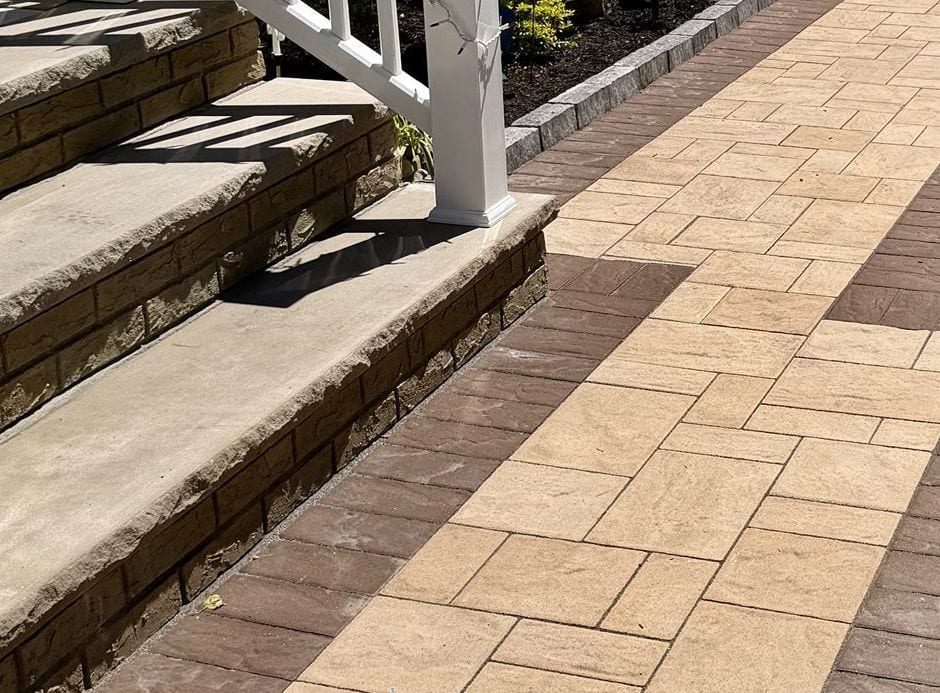
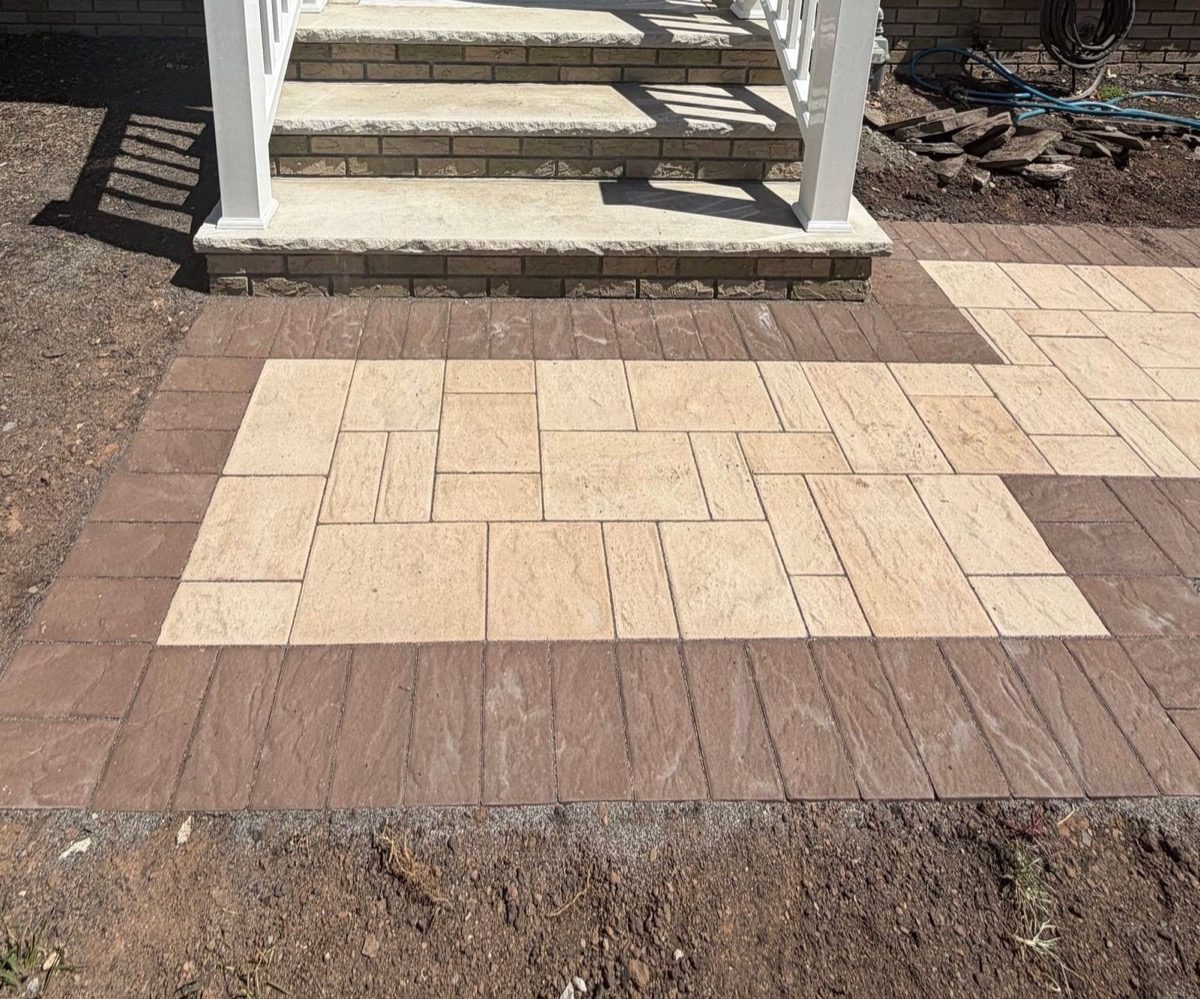
A paver patio is hundreds of units sitting on a compacted base, locked together by sand in the joints.
That construction lets it flex slightly without breaking. If one area settles, the pavers there can be lifted, the base rebuilt and the same pavers laid back, and the repair is hard to spot afterward.
The tradeoff is upkeep. Joints grow weeds and can lose sand, the surface needs occasional topping up and cleaning, and a patio built on a weak base will show dips that need to be dealt with. The color of the surface also tends to weather a little unevenly, which some people like and others do not.
Poured concrete: simple, solid and unforgiving
A poured slab is one continuous piece cast in place.
It is quick to build, easy to sweep and stands up to furniture well. The surface stays tight, with no joints to fill.
Concrete cracks. That is its nature, not a defect, and a good installer cuts or tools joints into the slab so that cracking happens along straight lines. But a slab that has cracked cannot be reset like a paver can. A crack can be sealed and a bad panel replaced, and a repair will show. If you are the kind of person who will notice every line, that matters.
Stamped concrete: a coating on a slab
Stamped concrete is poured concrete that is colored and pressed with a pattern while it is soft, then sealed.
It imitates stone, brick or slate. Done well it looks good from the street.
It behaves like poured concrete underneath, so it cracks like poured concrete, and the crack goes through the pattern. It also relies on a sealer and on color that sits near the surface. Both wear, and a worn stamped patio needs resealing or recoloring to look right again. We cover that in a separate guide.
How each one fails
Pavers fail by settling in places, by joints that open, and by edges that spread.
All of those are fixed by taking up the pavers and rebuilding underneath.
Poured and stamped concrete fail by cracking, by scaling at the surface where salt and freezing attack it, and by heaving where water gets under. Fixes range from sealing a hairline crack to breaking out and replacing a panel.
The difference worth remembering: a paver patio can be repaired in place and still look original. A slab repaired in place usually looks repaired.
Which one fits which yard
A yard with soft soil, tree roots or planned utility work leans toward pavers, because movement is expected and pavers allow for it.
A flat, well drained spot that gets heavy furniture and little else suits a plain slab. A visible patio near the front door, where looks matter and the budget is settled, is where stamped concrete tends to get chosen.
None of these is a rule. We would rather look at the site than guess, and tell you honestly if we think the surface you have your eye on is the wrong one for the ground.
When you collect quotes, make sure each one describes the base, not only the surface. A thin slab on bad soil and a paver patio on a good base are not comparable, even if they cover the same area.
Send us a photo of the area and what you are considering, and we will tell you what we would build and why. If a different surface suits the spot, we will say so.
Before you compare quotes, decide how you will use the space. A patio that hosts a grill, a table and a crowd twice a year is a different job from a small landing outside a back door. Think about how much you mind seeing a crack, how much sweeping and topping up you will actually do, and how long you plan to stay in the house.
Think also about what is underneath and around the spot. A patio next to a large tree, over an old trench, or on a slope has more movement in it than one on level, well drained ground. The more movement you expect, the more a surface made of small pieces makes sense. The less you expect, the more a plain slab starts to look sensible.
If you cannot decide, say so when you ask for a quote. A contractor who builds only one of the three will steer you to it, and one who builds all three can talk you through the tradeoffs on your own ground.
Step 3 of 3
Act on it
Quick answers, where to read next, and how we can help.
Questions people ask
Which is the cheapest to maintain over twenty years?
It depends on the ground more than the surface. Pavers need joint sand and occasional resetting. Concrete needs crack sealing, and stamped needs resealing as well. A patio on a good base needs the least of any of them.
Can concrete be made not to crack?
Not reliably. Joints are put in to guide where it cracks, and good preparation reduces cracking, but a slab can still crack. Anyone who promises none is promising too much.
Do pavers stay the same color?
They weather, and sun and wear change the surface over the years, usually unevenly. A sealer can slow this, but it does not stop it, and sealing has its own tradeoffs covered in another guide.
Is stamped concrete slippery?
The sealer on it can be slippery when wet, depending on the product and the texture. If the patio will get rain or a hose, ask about a slip resistant finish before choosing.
Can I switch from concrete to pavers later?
Yes. The old slab is broken out and removed, and a proper base is built. It is more work than starting on bare ground, so it is cheaper to choose well the first time.
Which is quickest to install?
A poured slab is usually the fastest to place, though it then needs time to cure before use. Pavers take longer to lay but can be used the moment the joints are filled and compacted. Stamped concrete takes the most steps and the most skill on the day.
Seeing this at your place?
Send us a few photos through the contact page and the chat there, and we'll tell you what we think.
Request an estimateOur masonry and hardscape workAll guides
Enduring On Construction, a New Jersey general contractor. NJ home improvement contractor registration 13VH13745900.
