Step 1 of 3
Understand it
The short answer, then why it happens.
The short answer
Water expands when it freezes. If brick, concrete, mortar or stucco is soaked when the temperature drops, the ice that forms in its pores pushes the material apart from the inside. One freeze does little. Repeated cycles of freezing and thawing, which can happen many times in a winter, open small cracks into large ones and break off surfaces. The defense is to keep water from entering and to let what gets in leave: sound joints, working gutters, flashing, drainage and breathable finishes.
How the damage works
Brick, mortar, concrete and stucco are all porous.
They take in water like a hard sponge, through the surface, through hairline cracks and through joints. Most of the time that is harmless, because the water dries out again.
The trouble is that water gains volume as it freezes, by roughly a tenth. Inside a closed pore there is nowhere for the extra volume to go, so it pushes outward on the walls of the pore. If the material is nearly saturated when the freeze comes, the pressure can exceed what it can take, and a tiny crack forms.
That crack takes in more water the next time, and the next freeze widens it. The damage builds in steps. This is why a wall that looked fine in the fall can show flaking, cracking or loose material in the spring. The damage is done over many winter nights, and it is often noticed when the weather warms.
Step 2 of 3
See it
Each picture sits right after the section it explains.
See itIllustrates section 01: How the damage works
Watch it happen
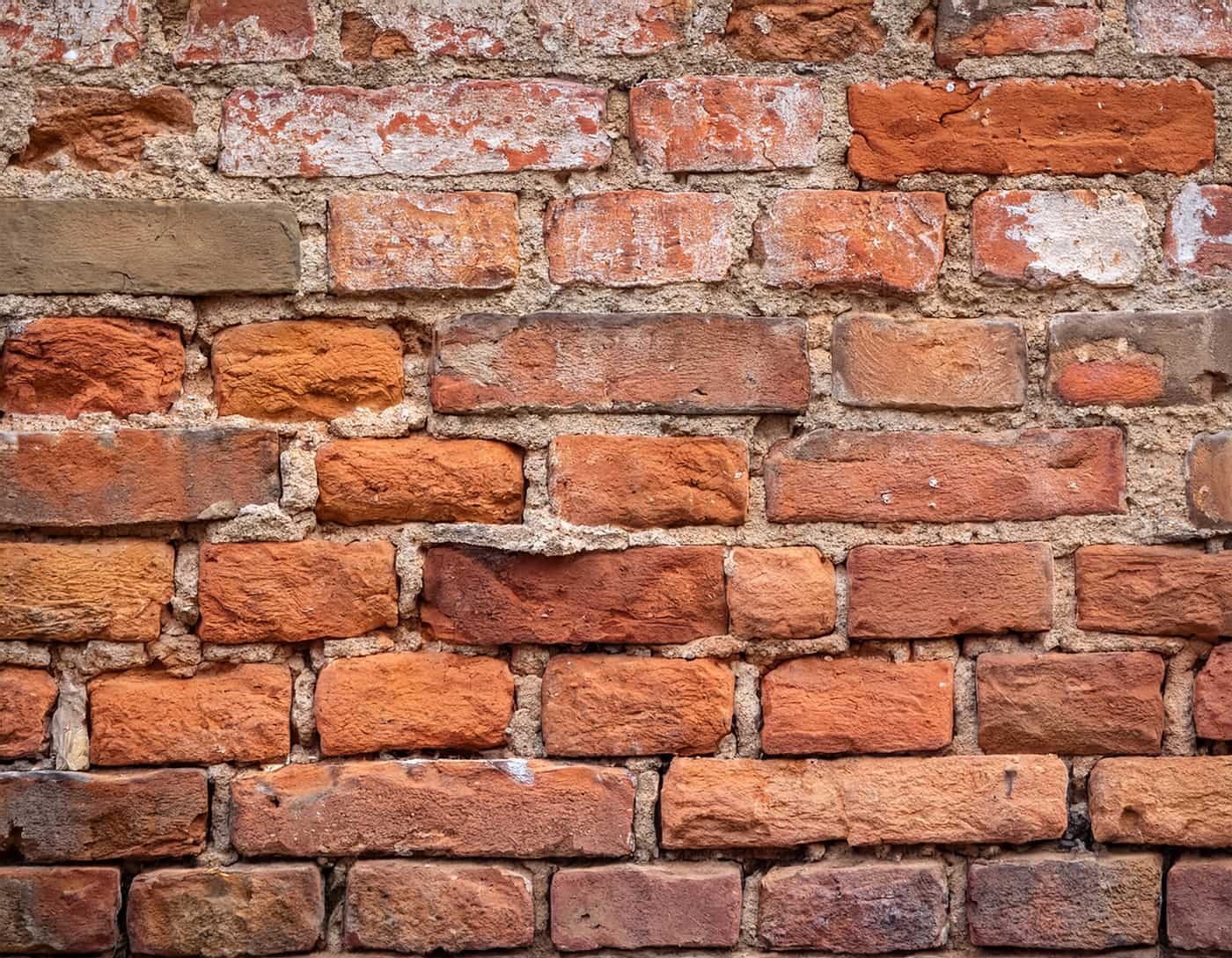
How freezing water damages brick
Water soaks into the pores of a brick wall, freezes and expands, and over repeated winters opens cracks and flakes the face off.
1. Brick takes in water
Brick, mortar, concrete and stucco are all porous. They take in water like a hard sponge, through the surface, through hairline cracks and through joints.
2. Water expands as it freezes
Water gains volume as it freezes, by roughly a tenth. Inside a closed pore there is nowhere for the extra volume to go, so it pushes outward.
3. Cracks open
That crack takes in more water the next time, and the next freeze widens it. The damage builds in steps.
4. The face flakes off
In brick, it shows as spalling: the face flakes off, often in patches at the base of a wall, under sills and near a leaking gutter.
5. Keep water out and let it out
Keep water out and let it out: clear gutters, repoint failing joints, keep soil and mulch off the lower courses, and keep weep openings open.
Why repeated cycles are hard on buildings
What matters is not how cold it gets but how often it crosses freezing.
A climate that stays below freezing all winter gives a few cycles. A climate that swings above and below freezing many times, with thaws, rain and refreezing, gives many cycles, and the damage adds up faster. Winters that swing above and below freezing often are of the second kind.
Sun makes it worse in a particular way. A south-facing wall warms during the day, melts snow that runs down the face, and then freezes at night. A shaded wall may stay frozen longer but cycle less. Where water can sit against a surface, such as the top of a wall, a step, a sill or the base of a wall, the cycles happen with the water already in place.
Salt enters the picture as well. De-icing salt dissolves in meltwater and carries into the surface, where it increases the number of freeze-thaw cycles at the surface and adds its own crystal pressure. That is why steps, stoops and walkways near doors suffer first.
What it does to each material
In brick, it shows as spalling: the face flakes off, often in patches at the base of a wall, under sills and near a leaking gutter.
Soft or old brick is most vulnerable. Mortar joints crumble and open, which then lets in more water.
In concrete, freeze-thaw shows as surface scaling, where the top layer peels in thin flakes, and as cracking and breaking at edges and corners. Concrete made with tiny air bubbles mixed in, called air-entrained concrete, handles it better because the bubbles give the water room to expand. Flatwork where salt is used is the most exposed.
In stucco, it shows as cracks that open, hollow areas that sound drummy, and sections that bulge and fall off. Water enters a hairline crack, freezes, and lifts the coat. Stucco over masonry and stucco over frame behave differently, but both fail where water gets behind the surface.
Where it shows first
Look at the places water collects or enters.
The tops of walls and chimneys, because rain hits them directly. The bottom of walls, because water splashes and wicks up from the ground. Under windows, sills and ledges. At corners and edges, which have two exposed faces. Around downspouts and below gutters. Steps and stoops, which are flat, wet and salted.
Inside the home, damp patches, peeling paint on interior walls over masonry and white deposits at the base of foundation walls tell the same story: water is in the wall.
The damage is often noticed in spring, when the thaw ends and the surface has had time to dry. Walk the outside of the house after the last frost and look for what changed.
What limits it
Keep water out and let it out. Clear gutters and keep downspouts discharging away from the wall.
Seal or repair cracks while they are small, using products suited to the material. Repoint failing joints before they open wide. Keep soil and mulch off the lower courses of masonry, and keep the grade sloping away.
Work on the surface, not just the cracks. Flashing at tops, sills and roof junctions sheds water away from the wall. Weep openings in brick walls must stay open. A breathable water-repellent can help on sound masonry; a film-forming coating over a wet wall can trap water and make freezing worse.
Go gently with salt. Use sand for traction or a product labeled for masonry, sparingly, and keep fresh masonry and concrete clear of salt in its first winter. The fall is a good time to look at a house, while you can still fix things before the first freeze. If you see the signs, send photos and we will tell you what the wall needs.
Step 3 of 3
Act on it
Quick answers, where to read next, and how we can help.
Questions people ask
Does a hard freeze damage all masonry?
No. Dry masonry is hardly affected. The damage depends on how much water is in the material when it freezes and how many times it cycles. Sound joints and good drainage keep that water out.
Why does damage show up in spring?
The winter's cycles can break material in small steps, and the damage is often noticed once it thaws and dries. Pieces fall away, cracks widen, and stains show. It is worth walking the house after the last frost.
Can I fix cracks in the fall?
Fall is a good time to seal small cracks and repoint open joints, as long as it is dry and above the temperatures the products need. Work done just before a freeze can be damaged if it has not cured.
Does sealing help?
A breathable repellent on sound masonry can reduce water uptake. A film-forming sealer over a wall that is already damp can trap water, which makes things worse. Fix the water first.
Why are my steps the first to go?
Steps are flat, hold water, get salted and have several exposed faces. They go through more freeze-thaw cycles than a wall does, with salt pushing the damage along.
Seeing this at your place?
Send us a few photos through the contact page and the chat there, and we'll tell you what we think.
Request an estimateOur masonry repair workAll guides
Enduring On Construction, a New Jersey general contractor. NJ home improvement contractor registration 13VH13745900.
