Step 1 of 3
Understand it
The short answer, then why it happens.
The short answer
Dark colors absorb more sunlight and turn it into heat, so dark vinyl siding runs hotter and is more likely to warp, especially on the walls that get the most afternoon sun, often south and west, and next to windows that reflect heat. Lighter colors are the safer choice for vinyl. A deep color is still possible with a product the maker designed for it, installed with room to move, or with a different material such as painted fiber cement.
How color turns into heat
Sunlight that lands on a surface is either reflected or absorbed.
A light surface sends a large share back, and a dark surface keeps most of it as heat. On a summer afternoon the difference between a pale gray wall and a near black one can be many degrees on the surface.
For vinyl that matters because the material changes size with temperature. A hotter board grows more, and a board that cannot grow freely will ripple. A dark board on a hot wall is the case where installation tolerances are used up fastest.
None of this is a reason to avoid color. It is a reason to match the color to the material and the wall. A little thought at the sample stage, about which side of the house the color goes on and what faces it, saves replacing boards later and keeps the wall flat for the life of the siding.
Reflected heat is the sneaky one
The wall can get hotter than the sun alone would make it.
Modern windows with a low emissivity coating reflect part of the sunlight. If that reflected light lands on vinyl nearby, it can concentrate heat on a patch of siding, and the result is a distorted area facing a window. The same can happen from other large glass nearby, such as a storm door or a neighboring window.
If you see a patch of warped siding on a wall facing another building's glass, or just beside your own large window, reflected heat is a likely cause. Changing the color might not be enough in that case, and moving or shading the source can be part of the answer.
Step 2 of 3
See it
Each picture sits right after the section it explains.
See itIllustrates section 02: Reflected heat is the sneaky one
Watch it happen
How dark vinyl warps in the heat
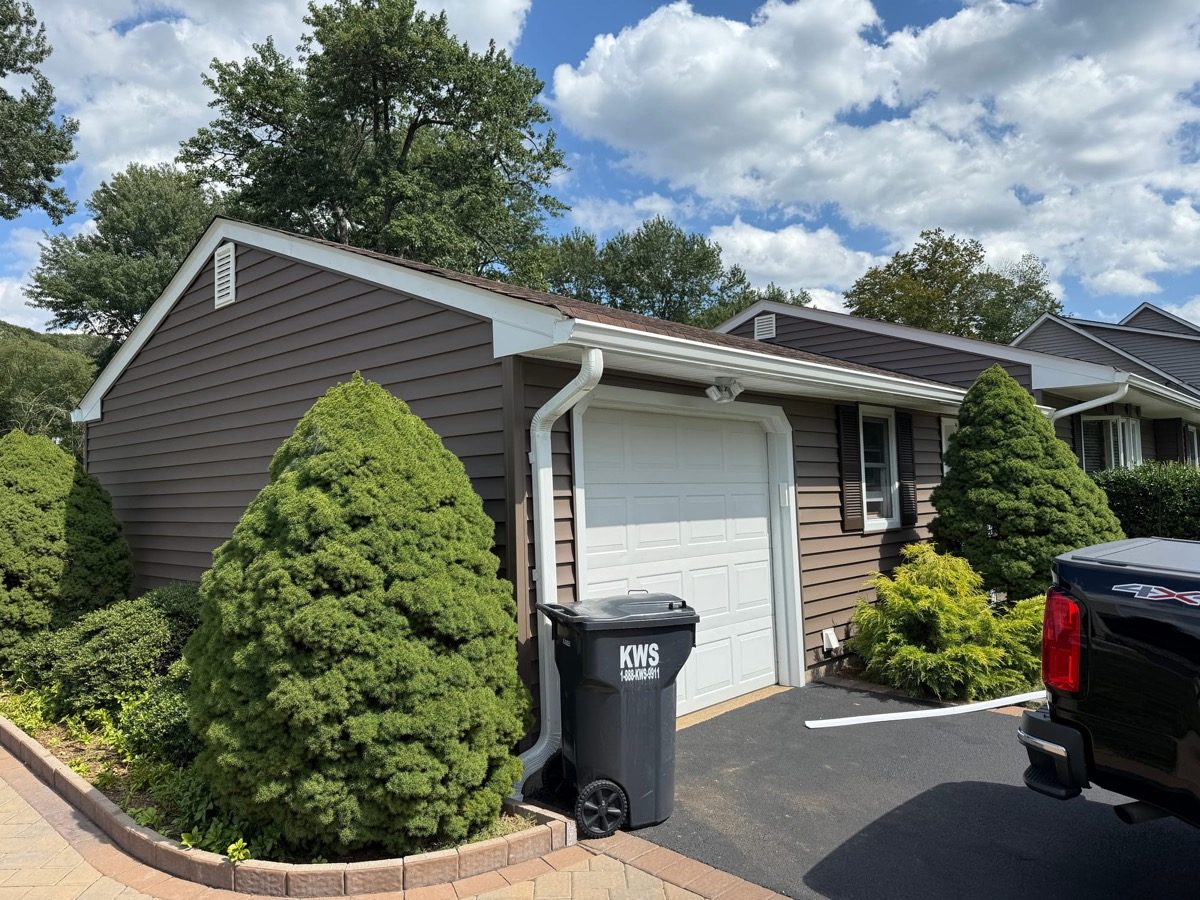
Light and dark vinyl in the same sun, a dark board growing until it ripples, heat reflected from a window onto one patch, a mid tone with a dark accent, a warped patch, and a dark wall on a stable board.
1. A light surface sends heat back
Sunlight that lands on a surface is either reflected or absorbed. A light surface sends a large share back, and a dark surface keeps most of it as heat.
2. A dark surface keeps it
On a summer afternoon the difference between a pale gray wall and a near black one can be many degrees on the surface.
3. A hotter board grows more
For vinyl that matters because the material changes size with temperature. A hotter board grows more, and a board that cannot grow freely will ripple.
4. Reflected heat is the sneaky one
Modern windows with a low emissivity coating reflect part of the sunlight. If that reflected light lands on vinyl nearby, it can concentrate heat on a patch of siding, and the result is a distorted area facing a window.
5. Choosing a color that holds up
On vinyl, the safer approach is a mid or light tone on the walls that take the most sun, and a deeper accent where the heat load is lower.
6. If you already have warping
Distortion caused by heat usually does not reverse. The affected boards are replaced, and the cause is dealt with so the new ones do not follow.
7. A dark house on a stable board
On a stable board such as fiber cement or wood, a deep paint color does not warp the wall. Paint in a deep color will fade sooner and need repainting sooner.
What the makers say
Many vinyl makers have limited dark colors or offer them in a formulation designed to handle more heat, and they state their own conditions for use.
Those conditions are worth reading before you choose, because installing a color outside the maker's limits can leave you without support if it warps.
A sample board left in the sun on a car dashboard or a bench for an afternoon is a cheap test, although it is only a rough one. Compare it with a lighter sample, feel the difference and check the board for any movement once it cools.
Choosing a color that holds up
On vinyl, the safer approach is a mid or light tone on the walls that take the most sun, often south and west, and a deeper accent where the heat load is lower.
A deep color on trim or a small gable is a smaller risk than a deep color on a whole wall. Be especially cautious in places where reflected heat is likely.
If you want a deep color across the house, consider a material that tolerates it. Fiber cement and wood take paint, and a dark paint on a stable board does not warp the way vinyl does. Dark paint colors also absorb more heat and some makers limit them, so check the paint maker's guidance and plan the upkeep as part of the choice.
If you already have warping
Distortion caused by heat usually does not reverse.
The affected boards are replaced, and the cause is dealt with so the new ones do not follow. That may mean a lighter board in that spot or shading the reflection.
Send us photos of the warped area and the surrounding wall, with a note of the time of day it looks worst. We will tell you whether it looks like heat, fastening or something else, and what we would do about it.
What to do if you love a dark house
A dark house can look excellent, and plenty of owners want one.
The question is which material gives you that look with the least risk. On a stable board such as fiber cement or wood, a deep paint color does not warp the wall. Check the paint maker's guidance on dark colors, and plan the repaint upkeep like any painted wall.
If you want to stay with vinyl, use a color the maker supports, keep the deepest tones to small areas, and make sure the installer leaves the room the product needs. Avoid a deep color on walls that face reflective glass, and avoid placing a dark wall where heat gets trapped, such as inside a courtyard or beside a large window.
Think about the roofline, the trim and the landscape too. A deep body color with light trim and a bright door can look crisp, and a mid tone body often photographs better than a very dark one because it shows detail. Whatever you choose, test a large sample on the wall before you commit.
Step 3 of 3
Act on it
Quick answers, where to read next, and how we can help.
Questions people ask
Can I use a dark color on vinyl at all?
Sometimes. Some makers offer dark colors designed to cope with heat and give conditions for use. Read those, and consider using the dark tone on trim or small areas first.
Why is the warping only near one window?
Reflected heat from a coated window or a storm door can concentrate on a patch of the wall. The rest of the wall may be fine.
Will a lighter color solve every warping problem?
No. Fastening too tight and no room at the ends cause warping on any color. A lighter color only reduces the heat load.
Does dark paint on fiber cement cause problems?
The board itself tolerates the heat well. Dark paint colors absorb more heat and some makers limit them, so check the paint maker's guidance.
Can warped boards be fixed in place?
Rarely. Boards that have taken a set are normally replaced, and we deal with the heat source so the new boards do not follow.
Seeing this at your place?
Send us a few photos through the contact page and the chat there, and we'll tell you what we think.
Request an estimateAll of our construction servicesAll guides
Enduring On Construction, a New Jersey general contractor. NJ home improvement contractor registration 13VH13745900.
